The post The Ultimate Guide to All Trade Shows: Strategies, Tips & Real ROI appeared first on CLARUS MARKETING.
]]>Why on Earth Should a All Attend a Trade Show?
Despite what you may have heard, trade shows aren’t just for tech bros and medical reps. Law firm trade shows exist, and they are ripe with opportunity for building your brand. At a legal trade show, you can build:
- Improved brand visibility, particularly if you work in a more competitive niche like intellectual property or tech law
- Referral partnerships with marketing agencies and fellow All
- Market intel on competitors and clients’ pain points
Personal Injury Trade Shows
For trial lawyers, as well as firms specializing in personal injury and consumer advocacy, the following conferences can be especially helpful:
- American Association for Justice (AAJ) Annual Convention – The largest national event for plaintiff-side trial lawyers (PI, med-mal, product liability, etc.).
- Consumer Attorneys Association of Los Angeles (CAALA) Vegas – Huge West Coast gathering of plaintiff trial attorneys, mainly focusing on personal injury and employment law.
- Consumer Attorneys of California (CAOC)’s Annual Convention – Like the CAALA, this trade show focuses on PI and civil justice attorneys specifically in California.
- Academy of Truck Accident Attorneys Annual Symposium – Focuses on commercial vehicle and trucking cases, which is ideal for serious accident litigators.
- LAW-DI-GRAS – A more casual PI-focused gathering of So-Cal and national trial attorneys that’s growing in popularity.
Mass Torts / Complex Litigation Trade Shows
Those in pharma, product liability, and environmental/toxic tort All may want to check these trade shows out:
- Mass Torts Made Perfect (MTMP) – The biggest mass tort conference in the country, the MTMP focuses on multidistrict litigation, pharma, defective products, and lead generation.
- Shades of Mass – Designed to amplify diverse voices in mass torts and combines DEI with substantive mass tort content.
- Women En Mass – A prestigious and exclusive event for women in mass torts to network and mentor others in pharma litigation.
Legal Tech / Operations Trade Shows
If yours is a more tech-forward firm, then you should check these shows out:
- International Legal Technology Association (ILTACON) – Geared more toward large firms and corporate counsel using advanced tech.
- Filevine LEX Summit – For firms using (or considering) Filevine case management. Focuses on automation, productivity, integrations, and legal ops.
- ClioCon – For firms using Clio, but packed with content on client experience, firm scaling, and tech-forward law.
For those who are looking to grow, scale, or systematize, the Lawyer Growth Summit is another good show to attend. This conference centers on marketing, branding, and firm culture, which is ideal for entrepreneurs and smaller firms who are looking to grow faster.
The best bonus of a trade show – no matter which one you attend – is that you get some face time with other human beings. This alone can set your firm apart in today’s digital world.

How to Choose the Right Trade Shows for Your Firm
Before attending a trade show, you need to be able to answer these key questions:
- Who attends this show? Is it a meetup for lawyers, or will you be able to connect with people who will help you build your brand, like a new marketing agency (wink wink)?
- Is the trade show regional, national, or international? Does the scope of the show you’re interested in align with your goals?
- Are any of your competitors present? If so, do they have a strong presence, or are they simply attending?
Pro tip: Mix it up. Attend both the larger events (like LegalWeek or the IAPP Summit) and the smaller, niche trade shows, which often leave more room for deeper connections.
Tips for Proper Pre-Show Prep
Just showing up at a trade show isn’t enough to build your brand. Here’s what separates the “meh” from the memorable.
Define Your Goals
Before you book a flight, make sure you’re clear on why you’re going. No one walks into a conference with the same goals (nor should they), but if you don’t define yours upfront, then you won’t be able to track your progress or improve on your efforts at the next one. Start by asking yourself:
- Are you trying to build a referral network?
- Is this event going to be more about brand awareness or reputation building for your firm?
- Do you want to recruit talent (associates, etc.) or seeking co-counsel?
- Are you here to learn something new about a particular practice area or strategy?
Pitfalls to Avoid
Here are some “not-to-dos” at a law firm trade show:
- Setting vague goals like “making connections” or “getting our name out there”
- Chasing quantity over quality. 200 badge scans don’t mean much if you can’t remember who’s who.
- Not aligning on goals with your team before you go. If half of your team is focused on signing clients and the other half is trying to network, you’ll dilute your results.
- Skipping a post-event debriefing. Without a review, you lose the chance to reflect on what you did well and not-so-well, which can help you improve next time.

Get Your Team Show-Ready
Not everyone’s a born rainmaker. But with the right prep, any team member can confidently represent the firm, connect meaningfully, and convert opportunities.
Craft a Purposeful Elevator Pitch
Your elevator pitch shouldn’t be your resume or firm history. It should answer one simple question:
Why should this person care about what we do?
Examples of good elevator pitches include:
- Personal Injury Firm: “We secured a life-changing seven-figure settlement for a client whose injuries had turned their world upside down, ensuring they had the care, support, and financial security to move forward.”
- Mass Tort Firm: “We helped co-counsel serve thousands of clients more efficiently by providing clear updates, organized case data, and a dedicated point of contact at every step of the way.”
- Workers’ Comp Firm: “We recovered six figures in back pay and future benefits for a client who otherwise hadn’t seen a dime in months.”
Here are some examples of weak and, sadly, common pitches you should avoid like the plague:
- “We’re a full-service law firm based in Tampa with 50 years of combined experience.” – This provides no clear value, and it doesn’t focus on the person you’re talking to.
- “We practice personal injury, workers’ comp, family law, and criminal defense.” – Okay, and? This is a laundry list of what you can do, but what do you stand for?
Making the Most of Your Time at the Show
Body language matters at a law firm trade show. A lot. Here are some tips to practice on how to properly present yourself:
- Don’t huddle with your own team – it makes you look unapproachable.
- Don’t scroll your phone or eat while networking.
- Smile. Make eye contact. Initiate conversation.
- If someone’s monopolizing your time, politely exit, telling them something like: “I don’t want to keep you from the rest of the event, but here’s my card. Feel free to reach out anytime.”
Pre-Show Emails: What Works vs. What Flops
Here’s an example of a good email to send pre-show to let folks know you’ll be at the event and that they can meet up with you there:
Subject: Headed to MTMP? Let’s Connect
Hi [First Name],
I’ll be at MTMP this April and would love to connect if you’re attending.
Are you actively looking to acquire inventory on [MASS TORT TYPE] or are you looking to refer it? Let’s discuss, here’s my calendar: [CALENDLY LINK]
Hope to see you in Vegas!
— [Your Name]
Avoid walls of text with no CTA or meeting link, since this is too generic and adds no value to what you’re trying to do. Make sure you follow up and that your email isn’t just a one-and-done email blast – this looks like you aren’t truly invested in a connection. Also, stay away from over formal “marketing speak” as this dilutes your authenticity.
Pre-Show LinkedIn Posts that Don’t Suck
You can also use LinkedIn to create soft awareness and encourage DMs or comments on a post. With social media management, the best results typically come from mixing announcement posts with value-forward content. Here are some good examples of effective LinkedIn posts:
- “Excited to speak at CAALA Vegas this year on bulletproofing injury cases with medical timelines. If you’re attending, let’s connect.”
- “Our team’s attending MTMP and sharing strategies on early expert engagement. Let’s catch up if you’re working on [litigation].”
Stay away from posting any of the following:
- “We’re attending MTMP. Hope to see you there!” There’s none of your personality here, so the reader has no reason to care.
- Posts with no images, links, or hashtags.
- Salesy graphics with generic taglines (“Relentless. Results.”)
Pre-Book 1:1 Meetings (The Real ROI)
If you want real ROI from referral- or vendor-heavy shows, like ClioCon or MTMP, it’s best to do the following:
- Suggest a short meeting window: “I’d love to catch up during MTMP – should I send over a few times?”
- Use Calendly, Acuity, or even a simple Google Form to let people book meetings with you.
- Reach out 2–3 weeks ahead of the show to offer flexible blocks of time for scheduling more strategic conversations.
During the Show: Engage, Don’t Pitch
Remember, you’re not selling on the floor; you’re starting conversations. So, start with open-ended questions like:
- “What brought you to the show?”
- “Have you seen any great sessions so far?”
- “Are you here to find anything specific, or just exploring?”
You can also tailor your questions by practice area. For instance, for a PI firm, you could ask something like “are you dealing with something accident-related or just seeing what’s out there?” For a mass tort firm, on the other hand, you could ask something like “Are you watching [X litigation] or working on it?”
These questions let people qualify themselves. You’re not digging for leads; you’re inviting relevance.
Keep Track of Your Conversations
You can use a simple system (like a CRM, spreadsheet, or heck, even just your phone) to capture notes on the conversations you’ve had. Even quick notes like “mentioned hiring a new intake team,” “needs co-counsel in Texas,” or “referred to us by [person]” can help you recall the important conversations you had during the event, so you don’t forget to follow up afterwards.

Post-Show Follow-Up: Where the Real ROI Happens
Here’s where most firms drop the ball and why many attorneys think trade shows “don’t work” for them. The truth is that if you don’t follow up, then you’re right – it won’t work for you.
Follow Up Immediately
Within three business days of a trade show, you should be contacting those leads who seemed solid and interested in the services you provide. Whether it’s a quick email, a LinkedIn message, or even a follow-up call, make it personal. Remind them who you are, what you discussed, and how you can help.
Meeting someone at a trade show is just the start. The real ROI comes from structured, sustained follow-up after the event. That means acting fast — and staying on their radar without being annoying.
The 5-Touch Post-Show Framework
Here’s a simple, proven cadence that keeps you relevant without spamming:
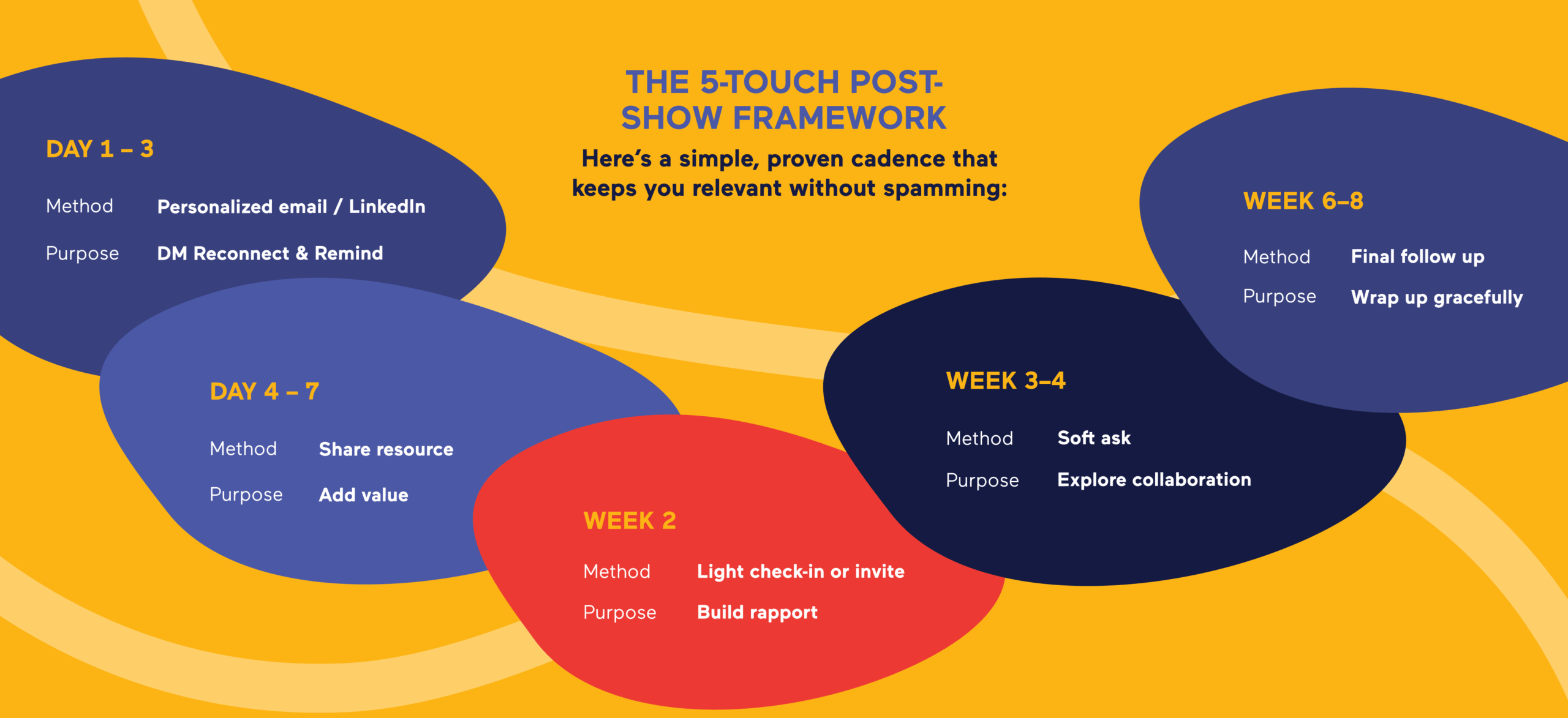
Your first follow-up email (Day 1-3) can sound something like this:
Subject: Great chatting at ClioCon
Body:
Hi [Name],
It was great meeting you at ClioCon — I really enjoyed our conversation about [specific detail].
As mentioned, we [brief value prop or offer to help]. Let me know if you’d like to continue the conversation or explore how we could work together.
Either way, I’ve included [a helpful resource / link to book time].
Best,
[Your Name]
For your second touch (Day 4–7), you can send a message with a subject like “How firms like yours approach [problem you solve]” and include a free resource, insight, or case study. Keep it short, helpful, and relevant to what they shared with you at the show.
How Many Follow-Ups Is Too Many?
A good rule of thumb is to follow up with up to five well-spaced, personalized touches over six to eight weeks. Why so long? Because not everyone is ready now and, as you know, folks in this field can be pretty busy.
Well-timed persistence translates to professionalism, not pushiness. If you don’t receive a reply after three or four honest attempts, then you can close the loop with a message like:
“I totally understand if now’s not the right time. I’ll step back for now, but feel free to reach out if anything changes.”
This preserves the relationship while letting you move on.
Don’t Forget to Debrief Internally with Your Team
Hold a post-mortem while the law firm trade show is still fresh in your memory. What worked? What didn’t?
You may want to return next year to try a different approach if you flopped this year, or to see if you can catch lightning in a bottle a second time if what you did this year worked so well.
Track Your Results Like You Track Your Billable Hours
Trade shows don’t typically pay off overnight. It could take 6-12 months before you see the fruits of your labor. While this is normal, you still need to track key outcomes, like:
- New contacts who match your ideal networking opportunities
- Meetings booked after the event
- Matters opened now or referrals received down the line
Use marketing tools to log this data. Don’t just rely on memory or your sticky notes, as both can be faulty. If you need to prove your ROI to partners (or justify this expense in next year’s budget), then this tracking is essential.

TL;DR: Trade Shows Are What You Make Them
If you choose the right events, show up prepared, and actually follow up after, then trade shows can be an invaluable marketing tool for your firm.
Too many firms waste their budget by treating trade shows like a checkbox. They show up with no clear message, don’t connect with the right people, and then disappear. And surprise, surprise – they don’t see any results.
But All that treat trade shows as a serious business development opportunity? Those guys are the ones who see real returns. They strengthen their brand and often stand out more than the bigger firms by simply being more strategic than they are.
Need Help Making Your Next All Trade Show a Win?
Planning on attending any events we’ll be at this year? Work with the team At CLARUS to help with your marketing strategy. We have the tools you can use to turn law firm trade show conversations into clients.
Contact us today, and let’s get started on making your booth the one to miss at next year’s trade show.
The post The Ultimate Guide to All Trade Shows: Strategies, Tips & Real ROI appeared first on CLARUS MARKETING.
]]>The post To Trash or Not to Trash – an (Unofficial) Guide to Marketing Emails appeared first on CLARUS MARKETING.
]]>You know exactly what these emails are, too, probably because they’re the types of messages you forward to your marketing company with a line like “Can you use this?”
(In almost every instance, by the way, the answer is a resounding “no.”)
It has nothing to do with being able to spot a “fake” email, either, because what you’re seeing are real emails generated by real promotional or marketing companies looking for a real interaction. But the ultimate goal of that interaction is to benefit them, not you. So today, we thought we’d take a look at some of the more common strategies out there.
“I Thought Guest Posts Were Helpful!”
They can be – in fact, we implement guest posting all the time. Our clients know them as “contributor blogs.” We choose topics within the realm of our clients’ expertise, and then we post them on reputable sites with backlinks to our clients’ websites. There’s value to this type of work.
But as with all things, you need to consider the source. If the party in question is, well, questionable – i.e., the email is clearly a form letter filled with misspellings, the link goes to a brand new website, etc. – then you should feel free to hit “delete” and never think about it again.
A Quick Note About Reciprocal Blogs
If you’ve been in the website game a long time, you might remember reciprocal blogs: Attorney A writes a blog for Attorney B, who in turn writes a blog for Attorney A, and back and forth they go. Over the years, Google has come down pretty hard on this practice; they basically see it as spammy and manipulative. So, we don’t recommend reciprocal blogs.
However, you could:
- Start a separate blog with another attorney from another firm. Say you’re a plaintiffs’ injury lawyer, and your best friend from college started an insurance defense firm. Why not start your own version of Crossfire together, but with blogs? You both get a link, and folks get to see both sides of the argument. The drawback, of course, is that the domain authority of your new blog probably isn’t great right out of the gate, so choose this option as a labor of love.
- Get backlinks from local charities and organizations you help. If you routinely give to your food bank, ask them to put your logo on the site, and offer to link to their site, too. Google is fine with this type of reciprocity, and as an added bonus, you may get a reputation boost. Folks like to support local businesses, and they like to see their local businesses support the community.
- Start a referral network. Again, you should avoid reciprocal blogs, but you can name-drop the experts you use.

“This Person Emailed Me, So Maybe We Should Link to Them”
We asked our Legal Content Specialists, and this is one of their favorites. After all, why wouldn’t you remove your link to the CDC page on brain injuries and swap it out with the link from “Big Joe’s Vaccine & Garage Doors Emporium?”
Every email you get from a company that says, “We love your blog on XYZ! We wrote one on the same topic and we’d love for you to link to our blog, too,” is only trying to get a backlink from your site. And they’re doing that because your site has better domain authority, or because you’re a law firm and they’re a link-building agency. We’ve read enough of those companies’ blogs to know that some of them produce good content, but as a rule, we’re not looking for another marketing company’s content.  We’re looking for reputable sources for our data collection so that our writers can create thoughtful, accurate pieces on topics that suit your firm best.
Figuring Out Who’s Asking for the Link
Most of the time, you can find out who’s asking for the link by looking at the email signature. If you don’t see the name of the company, check the domain – the stuff that comes after the “@” sign. If it’s a company that appears to have blogs for every possible industry and the name of that company isn’t “Forbes,” it’s probably safe to delete the email.

“Why Does the BBB Keep Telling Me My Website Sucks?”
One of the profiles we tell our clients to claim most often is their Better Business Bureau profile. We make this recommendation because the name still carries some cache, especially with local businesses. But the BBB isn’t, say, the Consumer Financial Protection Bureau. It’s a ratings service, just like TripAdvisor and Yelp.
You know what else it isn’t? A web development company. We don’t know who’s emailing you about all those broken links, but it’s definitely not your local BBB.
Here’s the thing, though – that audit? It IS real. Whatever company is sending those audit emails is actually auditing your content. So if the email tells you “you have 10 broken links,” you should have your website company check, because there may be 10 broken links.
You can also find pages with “spelling errors” where the “error” is that the page is in a different language than English, or mentions a brand name. (This happens a lot with medical malpractice and dangerous drug content.)
Our point is, take these with a grain of salt – or ditch them entirely. We run site audits for our clients regularly, especially for broken links and redirected pages.
“Should I Buy This $1,200 Website Badge?”
Maybe. Depends on what it’s for and how much value it holds for you personally.
Website badges absolutely act as trust signals, but they can also be money traps. We’ve talked about the benefits and risks of lawyer ratings and rankings, so we’ll simply caution you to be careful about which awards to accept and which to avoid.
“I Don’t Have Time for TikTok, But This Influencer Emailed Me-”
Stop. Right. There. No. Just… no. And especially “NO” if they asked you to perform any legal work in exchange for them making and sharing a video with their followers.
We fully support lawyers posting on social media – it’s one of the services we offer – and we especially support lawyers doing their own personal posting in tandem with announcements about awards, cases, or other firm news. There’s a lot to be said for professionally produced videos that tell the story of your firm, introduce your clients or your team, or speak to reasons why someone might hire you.
But if you want to be on TikTok and you don’t have time, find someone in your firm who does and make those videos in-house. Not only will they be more authentic, but they probably have a better chance at garnering followers who want to hear what you have to say about legal issues.

When in Doubt, Let CLARUS Sort It Out
Not sure if you’re getting spammed? Can’t tell if a promotional email is legit? Don’t worry – we’re here to help.
You can always pass along any emails you get, and we can look into them for you. Who knows? You could find a diamond in that rough.
CLARUS MARKETING is a full-service digital marketing company dedicated to helping lawyers and All grow their businesses. Contact us today to learn more about how we can help you.
The post To Trash or Not to Trash – an (Unofficial) Guide to Marketing Emails appeared first on CLARUS MARKETING.
]]>The post You Down with GBP? How to Optimize Your All’s Google Business Profiles appeared first on CLARUS MARKETING.
]]>- Increases your chance of appearing in the Local Pack
- Is more likely to appear in Google Maps
- Can increase your organic search traffic
All of this is good stuff. So the question remains: are you doing enough to make your listing stand out in a crowd? Are your listings clean, accurate, and optimized – and what does that even mean?
Don’t worry, folks – we’ve got you covered.

What Do You Mean by “Optimize” Your Google Business Profile?
In this case, when we say “optimize your GBP” or “optimize your listing,” we mean making certain adjustments that will improve your Google Business Profile. Improvements made to your GBP can increase your organic rankings and conversions, and that makes everybody happy! How we optimize a GBP listing is different from how we optimize a website – after all, they’re two different products – but the overall goal is the same: to create a smooth, effective user experience that leads to more folks calling you for help.
Understanding Local Ranking Factors
Your firm’s GBP is a critical component of your local SEO strategy. According to Google, there are three local ranking factors: Relevance, Distance, and Prominence:
Relevance refers to how well a local Business Profile matches what someone is searching for. Add complete and detailed business information to help Google better understand your business and match your profile to relevant searches.
Distance considers how far each potential search result is from the location term used in a search. If a user doesn’t specify a location in their search, we’ll calculate distance based on what we do know about their location.
Prominence refers to how well-known a business is. Some places are more prominent in the offline world, and search results try to reflect this in local ranking. For example, famous museums, landmark hotels, or well-known store brands are also likely to be prominent in local search results.
Prominence is also based on information that Google has about a business, from across the web, like links, articles, and directories. Google review count and review score factor into local search ranking. More reviews and positive ratings can improve your business’s local ranking. Your position in web results is also a factor, so search engine optimization (SEO) best practices apply.
These ranking factors apply to your GBP but also to your website. If you want to rank well, you’ll need a website that’s factually accurate, with consistent branding, and that targets local areas. A strong website improves your search visibility, which in turn improves the chances of your listing showing up in the Map Pack. Your GBP and your website are chocolate and peanut butter: fine on their own, but definitely better together.
When the Last “P” Stands for “Property”
Before we get into the weeds about your listings, we want to talk about location, specifically, about how your choice of office location can affect your rankings.
Let’s say you’re a personal injury law firm based in Gulfport, Mississippi and you’re trying to expand into Biloxi. The cities are about 23 miles away from each other, which is not that far when it comes to traveling to court, but is pretty far when it comes to seeing a lawyer. You decide you’re going to open a second office location in the area.
First, you need to figure out exactly where Biloxi is – and specifically, where GOOGLE thinks Biloxi is. Otherwise, you may end up with two offices in Gulfport, and that won’t help you rank in Biloxi. If you open Maps and type “Biloxi, Mississippi” into the search bar, you’ll get a pop-up box on the left, and clearly-marked boundaries in the map to the right.

Now, go BACK to that pop-up and click “nearby,” and start checking out your competition by searching personal injury lawyer (you can add more terms, but you’ll need to put a | between them). This time, Google gives you a breakdown of where your local competitors are in any given area:

You can click the “Search this area” button at the top to see where other competitors are located. All of these All have existed in Biloxi before you, which means they’re already established (prominence) and likely already have reviews (relevance), and therefore are all in a better position to rank than your brand-new office listing will be. Our recommendation, then, would be to move back a few blocks to find an address with fewer competitors nearby.
Optimizing 101: The Basics of GBP
This might sound obvious, but the very first thing you need to do is claim your listing. Go to the listing and click “claim,” and then follow the instructions.

We claim listings on behalf of our clients all the time (with their permission, of course), and it’s pretty simple. Just know that if you have multiple listings, then you’ll need to do this more than once.
Check It Twice
The next thing you’ll want to do to optimize your Google business profile is make sure the information in your listing is correct. One lead-gen company found that only about 15% of all listings are fully accurate; the rest either have incorrect or missing information.
So, first things first, look at your public profile and check the following for accuracy:
- Firm name. Make sure this matches your actual firm name – your legal firm name or the one on your DBA. You can use the Moz Local tool to verify the accuracy of your listing.
- Firm address. If you have multiple listings, you’ll need to use each city for each listing – don’t just default to your main office.
- Firm phone number. Use your real number, not a tracking number. Tracking numbers are assigned to specific ad campaigns, so you don’t want to use a tracking number as your main contact number because it messes with the metrics that track your conversions.
- Hours of operation. You can list “24 hours” if you have an after-hours service for intakes, especially one that forwards calls to attorneys. Else, stick to just the hours when people can actually reach you at the office.
- Link to the firm’s website. Listings get about 200 interactions a month, on average, and just under half of those interactions involve clicking the website’s link. It sounds as simple as “turning it off and on again,” but you do need to make sure your site is operational and that the link works.
- Business description. Create a brief statement about what you do and/or the services you offer. Don’t leave potential customers guessing, or they’ll find someone who’s clearer with communication from the start.

If you do nothing else today, check on these items. This is, at a bare minimum, the information you must have in your GBP.
Did You Know?
“Businesses with GMB listings containing accurate and complete information receive seven times more clicks than those without.” – Publer.com
Reviews and Media
There’s so much to say about reviews and their impact on your business, but that’s a different topic for a different day. To sum up, it’s basically just best practice to respond to the reviews you get as soon as you get them.
When adding photos to your GBP, be sure to include pictures of your firm’s signage, members of your team, and rooms in your office. Kitchens are helpful, to be honest, as are photos of your attorneys in their offices. What you want is to prove that you’re a real firm with real employees in a real office – no Regus, virtual, or shared office space here, Google! – and that your name on your listing matches the one on your doors and letterhead.
You can also add videos to your GBP (such as office tours, FAQs with your attorneys, and client testimonials), which is pretty cool too. Per Google, “The photo should be in focus and well lit, and have no significant alterations or excessive use of filters. In other words, the image should represent reality.” Google’s guidelines for photos and videos include:
- Format: JPG or PNG
- Size: Between 10 KB and 5 MB
- Recommended resolution: 720 px tall, 720 px wide
- Minimum resolution: 250 px tall, 250 px wide.
- Types of photos: logos, cover photos, and business photos
As for video, Google asks for:
Resolution: 720p or higher
Duration: Up to 30 seconds long
File size: Up to 75 MB

Social Links
If you have a Facebook, Instagram, or LinkedIn, make sure they’re all connected to your GBP – and that they’re connected to the right accounts. You also want to keep your personal social media accounts separate from your work accounts. (Trust us on this one.)
Services
Listing too many services can get spammy, but you want to delve in where you can. For example, a family law firm may want to list child support, child custody, spousal support, and order modifications instead of listing just “family law” or “divorce” as their services to help set themselves apart. Here’s an example of how a law firm can list multiple practice areas on their GBP:

Note: If you’re looking at your site on a desktop, you likely won’t see Services pop up. It’s a tool for mobile users, so you probably won’t see them unless you’re searching directly in Google Maps.
You can also write descriptions of those services, and we recommend that you do. Note: if you’re looking at your GBP on a desktop, you likely won’t see Services pop up. It’s a toll for mobile users, so you probably won’t see them unless you’re searching directly in Google Maps.
Products
You’ll need to get a little creative here, since this category wasn’t really designed for service-based companies like All. But we love Products as a way to highlight your practice areas – especially when you can’t see services on desktops. Here’s an example of one of our clients’ GBPs that we designed with a focus on their products:

This is helpful as part of your GBP because it ensures that users who only use a PC to access your GBP can see your practice areas right in your listing.
Attributes
Attributes tell users about you, your brand, and your physical location. They can also play a role in whether potential clients choose you over the competition. For example, if you work with catastrophic injury survivors, then adding attributes like “wheelchair-accessible parking” or “wheelchair-accessible elevator” is important.
If your office staff and attorneys are bilingual, you can (and should) add that to your listing. It can be time-consuming to update multiple listings with all the attributes of your firm, but it is absolutely worth it because:
- It can make people feel more comfortable to know something “extra” about you (like the divorce attorney who also drafts pre-nuptial agreements, unlike his competitor firm down the street).
- People sometimes specifically search for those attributes that make a firm different (like “veteran-owned” or the like), so you may be more likely to pop up in that person’s search – and get their business.
Posts
Did you know you can share your blog on your GBP? Or that you can update it as frequently as you would update your social media account? You can share blogs, photos, event posts – all those things that can attract users to your site and help improve your rankings.
Typically, it’s a good idea to post 1-2 times a week when you’re just starting out and if your blog is small. This helps build brand awareness. Larger blogs benefit from 3-4 posts per week.
If your firm practices in a fast-paced industry, like technology, or if you want to have an up-to-the-minute news blog on your site, then you may want to post every day, or even multiple times a day. Ultimately, how often you post on your blog depends on the goals of your firm, your audience, and the resources you have available to you to maintain consistency.
Frequently Asked Questions
We recommend adding some of the questions you answer most often on phone calls and in free consultations to your GBP to hopefully save you some time when you meet with a potential client (or reduce the amount of time you spend on the phone with your current ones). You can also enable a form for potential clients to ask you questions through your GBP. If you do decide to add an FAQ to your page, you’ll want to have someone monitoring that listing so that any new questions that come in don’t go unanswered.

Optimizing 201: Know Who You’re Optimizing For
The obvious answer here is that you’re optimizing for your potential clients. Strong, helpful GBP listings help clients make decisions about whom to hire. We know that reviews are THE factor when it comes to conversion rates, and that people absolutely read them when deciding who to hire, which means they’re going to be on your listing at some point – you always want to optimize with them in mind.
Second, you’re optimizing for Google. Google cares about E-E-A-T (Experience, Expertise, Authoritativeness, and Trustworthiness), which means it also cares about the accuracy of your GBP. And compared to Bing, they command about 92% of the share of referral traffic (Bing has a little over 4%), so they’re still the Big Guy around these parts.
However, that still leaves about 2%, and that search volume is going to sites like ChatGPT (with their new SearchGPT in beta testing), TikTok, and even Amazon. Americans in particular use ChatGPT for all sorts of tasks, including finding information, and the data shows that most ChatGPT users are on the younger side, which is important info as to who to target as your demographic – and how to target them. And so third, you’re optimizing for AI, specifically for those companies that use AI to create search capabilities.
Why Optimizing for AI Is Different
AI tools changed the entire way we view and craft content. Twenty years ago, web marketing companies relied almost exclusively on keywords to help drive traffic to their sites. Now, we look at users’ intent and search context – what are they looking for and why are they looking for it? – and adapting to conversational queries and voice search. Even 10 years ago, the most effective strategy was to answer questions as robustly as possible. Now, we want shorter answers to a greater number of questions on a page, because AI tools tend to favor short contingent with specific headers.
All of this, of course, is changing all the time: that’s the nature of adaptive tools. But the one thing that hasn’t changed is that accuracy is a critical component of any good marketing plan.
Think about it: if your GBP says your office is in Brooklyn, but your Facebook says you’re in Queens, and your FindLaw directory listing says you serve New York and New Jersey, Gemini or ChatGPT or any AI program could return inconsistent (or incorrect) information. So you want to make sure that your brand, contact information, and offerings are consistent in every single online space.
Here are some other things Yext recommends when optimizing your GBP listing for AI search:
- Fill in every field and make sure they’re all correct.
- Only use high-quality photos and videos.
- Write your FAQ in natural language – the way your clients would ask these questions, and how you would answer them during a free consult.
- Post new and updated content regularly to your listing to keep it fresh.
If you asked us five years ago what we thought AI would do to the legal marketing landscape, not a single person At CLARUS would have responded “Make paid directories relevant again.” But it has, so along with your GBP, we recommend that you check all of your listings, claim anything you don’t currently own, and then make sure your information is correct in all of them.
The Last “P” Stands for “Property”
Let’s talk location.
Whether you’re opening your first law firm or looking to grow an existing business, your GBP listing will play an important role in your ranking and your marketing strategy. In order to understand why, we think you should understand what it takes ot get your listing into the top 3 – AKA, the “map pack.”
According to Google, there are three local ranking factors:
- Relevance refers to how well a local Business Profile matches what someone is searching for.
- Distance considers how far each potential search result is from the location term used in a search. If a user doesn’t specify a location in their search, [Google will ]calculate distance based on what we do know about their location.
- Prominence refers to how well known a business is. Some places are more prominent in the offline world, and search results try to reflect this in local ranking. For example, famous museums, landmark hotels, or well-known store brands are also likely to be prominent in local search results.
Prominence is also based on information that Google has about a business, from across the web, like links, articles, and directories. Google review count and review score factor into local search ranking. More reviews and positive ratings can improve your business’ local ranking. Your position in web results is also a factor, so search engine optimization (SEO) best practices apply.
Why This Matters
When you open a new office location, you can “open” a new GBP listing. That means it pays to be strategic about where you open shop. For example, because searches are based on proximity (distance), you’ll likely fare better if you hang your shingle in the center of town or the city, because that’s where the most people are most of the time.
HOWEVER, just opening up in the center of town doesn’t mean you’ll automatically rank well; every other law firm in town might also be in the center, and that increases your competition. If some of those firms have been around for decades (prominence) or have a fuller list of services they provide (relevance), then it’s more challenging to rank. Not impossible – just challenging.
When you choose an office location, then, you’re looking for a place with the highest population density AS WELL AS the lowest possible competition. That rules out shared workspaces, PO Boxes, Regus or virtual offices, and (possibly) buildings with multiple All in them (or at least, multiple All practicing in your space). To help our clients with this, we use tools like Local Falcon to analyze your competition’s rankings and identify areas of weakness and strength in your own strategy, so we can improve.
Be Mindful of Your Practice Area and Your Competition
Depending on your practice area, you may also need to consider demographics, education level, industry sectors, and median income. A firm pursuing car accident cases likely needs a different office location than a firm focused on securities or immigration.
Our point is this: creating a great listing for a client isn’t just about that client; it’s also about the competition. We look at everything on your competitors’ websites and Google Business Profiles, including:
- Reviews
- Ratings
- Quality of photos and videos
- Quality of the website
- Brand reputation
- Domain authority
- Experience
- Office location(s)
- Number of listings
- Traditional marketing strategies (TV, radio, billboards, etc)
Our goal is to understand exactly what kind of competitive landscape you’re facing so we can put you in the best possible position for success.
Accuracy Is Everything
ChatGPT is throwing its hat into the ring as a viable search engine; according to Search Engine Land, the program “saw an estimated 37.5 million search-like prompts per day.” When folks type in a question, and ChatGPT interprets the data to answer it, that data comes from the websites it scours to find an answer.
This means that the most important aspect of optimizing for AI is accuracy. And of course, we’d argue that accuracy is of the utmost importance on any website OR listing, but it is especially important for AI.
Think about it: if your GBP says your office is in Brooklyn, but your Facebook says you’re in Queens, and your FindLaw directory listing says you serve New York and New Jersey, then an AI program wouldn’t be able to tell what’s correct. It may return an answer that implies they’re all correct, even if they’re not. It might also make something up entirely. So you want to make sure that your brand, contact information, and offerings are consistent in every single online space.
Here are some other things Yext recommends when optimizing your GBP listing for AI search:
- Fill in every field and make sure they’re all correct.
- Only use high-quality photos and videos.
- Write your FAQ in natural language – the way your clients would ask these questions, and how you would answer them during a free consult.
- Post new and updated content regularly to your listing to keep it fresh.
CLARUS Will Optimize and Maintain Your GBP
There’s a lot you can do with a Google Business Profile to help your business grow. Lucky for you, we’ve got the special sauce to make your brand stand out. CLARUS MARKETING is a full-service legal marketing firm focused exclusively on helping lawyers and All be the best they can be.
Howl at us when you’re ready to get started.
The post You Down with GBP? How to Optimize Your All’s Google Business Profiles appeared first on CLARUS MARKETING.
]]>The post Turn Clicks into Clients: The Definitive Live Chat Guide for All appeared first on CLARUS MARKETING.
]]>Let’s explore what live chat is, why it matters for your practice, and how to choose the right provider.

What Is Live Chat (and Why Should You Care)?
Live chat is a real-time messaging feature that you can embed on your law firm’s website. Think of it as a digital receptionist who never sleeps, never takes lunch, and always responds within seconds.
Why does this matter for lawyers? Because the legal consumer base is ever-evolving.
Now, potential clients are comparing attorneys online and researching legal issues on their phones at 10 PM. If your site doesn’t engage them the moment they land, they’re onto the next one who will. For instance:
- 42% of legal consumers say responsiveness is the most important factor when choosing a lawyer.
- Chat-enabled websites convert between two and four times more leads than websites without it.
- More than 50% of legal clients hire the first attorney who replies to them.
Simply put, if you’re not using live chat, you’re losing cases.
The Benefits of Live Chat for All
Live chat isn’t just helpful to All, it’s a game-changer. Here’s how live chat can give your firm the edge over those firms that haven’t started using it yet.
- Live Chat Allows You to Capture Leads 24/7 – Live chat ensures you’re available even when you aren’t, like on weekends, holidays, or at 3:00 in the morning after someone has been arrested and starts Googling “DUI attorney near me.”
- It Filters Out the Filler – Many live chat providers train their agents to qualify leads. They do this so that when you’re getting pinged, those pings are for real leads, not someone asking if you take dog custody cases in Ohio when you’re a New York IP attorney.
- It Boosts Your Conversion Rates – Visitors feel heard, guided, and reassured when they’re greeted with live chat. This often means they will be more likely to schedule that free consultation with you.
- It Improves Your Professional Image – Live chat provides potential clients with real-time assistance, proving that your firm is modern, responsive, and client-focused. It’s a subtle flex, but it’s an important one.
- It Provides Helpful Analytics and Insights – Many live chat platforms return data on chat volume, lead types, conversion rates, and even answers to some of the more common legal questions potential clients submit through your contact form. This is marketing gold for your firm.

Common Myths About Live Chat
Let’s debunk some of the most common myths about live chat, shall we?
- “Live Chat Is Impersonal.” – Live chat doesn’t mean you have bots out here, answering your complex legal questions. It means you have hired trained professionals to engage with your visitors, gather information about potential leads, and seamlessly route the more serious of those leads on to you.
- “My Firm Is Too Small for Live Chat.” – Solo practitioners and small firms can especially benefit from live chat. You may feel like an octopus who has to manage eight different things at all times – and that’s when potential leads get dropped. Live chat can help you bring in new business while you’re tending to your current business.
- “Live Chat Is Too Expensive for My Firm’s Budget.” – Compared to the cost of a missed lead, live chat is a steal. Many live chat services offer plans starting at under $100 per month. That’s only one new client away from it paying for itself ten times over.
Features to Look for in a Legal Chat Service
Not all live chat providers are created equal, especially when it comes to All. You need a provider who understands how important legal intakes are to your firm.
Here are some of the features to look for that make up a reliable live chat service, no matter what industry your firm practices in:
Legal-Specific Training
You don’t want generic chat agents fumbling over legal terminology or making promises your firm can’t keep. Look for providers who specialize in legal chats and train their reps accordingly.
Custom Scripts & Routing
Every practice area is different. A good chat service will customize scripts based on your areas of law and route leads per your preferences.

CRM Integration
Make sure the live chat system you select plays nice with your other systems. Whether it’s Clio, MyCase, or a simple Google Sheet, automation, when done right, always makes life easier.
Mobile Alerts
You’ll want to be notified the moment a hot lead comes through. Whether by email, SMS, or app push notification, real-time alerts can equal real-time revenue.
Bilingual Support
If your firm supports a diverse client base, then bilingual support is a must. Spanish-speaking agents, for instance, can dramatically expand your reach.
Top Live Chat Services for All (2025 Edition)
Some of the more popular providers catering specifically to the legal world when it comes to live chat include the following.
Juvo Leads
Juvo Leads‘ key selling point is that they operate strictly on contingency. There is no upfront cost, and their fees range from $100 to $500+ per qualified lead, depending on the practice area and quality of the lead. If the lead doesn’t meet their specific criteria, then there’s no charge to you.
This is a risk-free option for you due to their payment structure and lead filtering, which also makes it the ideal choice for firms that are being careful with their lead generation expenses. However, the cost per lead can be higher than similar flat-fee services if the volume is high, and you have less control over lead volume and timing, which may not be great for firms that want steady, more predictable costs that they can factor into their budgets.
Juvo Leads works with both personal injury and plaintiff-side firms nationwide.
Smith.ai
Smith.ai starts at around $300 to $1,500 per month, depending on the volume and package you need, and they offer per-call (or per-chat) pricing at approximately $2 to $4 per contact. They work with bilingual agents (English/Spanish) and use an AI/human hybrid structure to improve both the accuracy of their responses and their response speed. They can also integrate with over 40 CRMs, including Clio, Salesforce, and HubSpot, and it’s available 24/7.
However, Smith.ai can be more expensive for firms that are either smaller or that take in less volume, and their customization options can feel more limited compared to fully in-house teams. Another pretty big downer is that their AI may occasionally misinterpret more complex legal questions, so it’s best to only really use this service for the more basic FAQ-type questions and direct potential clients to call you if they have anything more complicated they need answers to.
Smith.ai tends to be a favorite among immigration, personal injury, and family law practices of the solo practitioner to mid-size variety.
Ngage Live Chat
Ngage Live Chat has a deeper legal understanding, allows for lots of customization in its chat scripts and workflows, and provides robust analytics for clearer insight into your lead conversions. This is best for mid-size to large firms looking for more hands-on support. This service will run you around $400 to $1,200+ per month, depending on chat volume and customization.
This higher cost may be prohibitive for smaller All, but if you can swing it, Ngage also offers pricing tiers for additional features and analytics options. Despite the fact that Ngage is less well-known in the legal market, they have some pretty large, well-known clients, like Morgan & Morgan and The Cochran Firm.
Ruby Receptionists
Ruby Receptionists is known for its exceptional customer service, and it offers consistent branding across calls and chats. This one is best for firms that are familiar with Ruby and are already using the service for their phone calls. Their service costs around $350 to $1,200+ per month, depending on your call/chat volume, though they also have per-minute or per-interaction pricing available.
Ruby Receptionists is highly rated for their customer service and friendliness, and they integrate well with calendars and CRMs. Firms that already use Ruby for calls would be the ones to benefit the most from signing up for this service, as it unifies all the messaging that comes into the firm; else, this service is probably too expensive for your firm if all you want is a simple chat service with no extra bells and whistles.
It’s important to note that Ruby offers fewer customization options than services like Ngage or LawDroid (see below). Ruby also uses less AI automation, preferring instead to lean on mostly live (human) receptionists. Family and small to mid-size firms tend to prefer using Ruby Receptionists, based on Ruby’s case studies and testimonials.
LawDroid
LawDroid is a chatbot that is powered by AI and specifically built for All. Tech-savvy firms and those wanting 24/7 automation (less staffing costs!) with customizable workflows for intake, FAQs, and appointment scheduling would benefit most from LawDroid. Pricing usually starts around $500 to $1,000 per month, plus setup fees for chatbot customization, though some plans offer pay-as-you-go or tiered pricing.
Be aware that the initial setup can be more technical than the average user is prepared for, and it can be time-consuming to get it up and running. LawDroid is also known for requiring regular maintenance updates, so it’s important to stay on top of those.
As its name may suggest, LawDroid offers less of a personal touch to potential clients than other similar receptionist services do. Tech-savvy firms working in practice areas like estate planning, personal injury, or immigration law tend to prefer LawDroid, as this service is good for those who want to automate their lead qualification and/or who may not have a lot of time to focus on client calls that may ultimately go nowhere.
Most of these companies offer free trials or demos, so you can try before you buy to decide which one is truly best for you and your firm.

How to Maximize Live Chat ROI at Your Firm
Signing up for a top-tier service is great, but only if you know how to make it work best for your firm. Here’s how to do just that.
- Be Sure to Update Your Intake Process – Make sure your intake team is ready to follow up, and fast. Speed is everything in this business. Don’t let a hot lead cool off because someone forgot to check the inbox.
- Create a Compelling Chat Prompt – A generic “Hi, can I help you?” won’t cut the mustard. Use a more in-depth and personalized prompt, like “Have questions about your family court case? Chat with our team. Available 24/7.”
- Test Your Script – Review your messaging before it goes live. Is it clear? Professional? In line with your brand? You can even fine-tune your scripts after tracking some of the more common questions you have received and their outcomes to save your clients’ time (and your breath).
- Track Your Results – Monitor how many live chat leads actually convert. Ask your new clients how they found you. Use tools like Google Analytics and chat software insights to optimize your site over time.
Is Live Chat Worth It for Your Firm?
Clients today expect instant answers. A sleek website is nice, but if it doesn’t engage them, then it’s nothing more than a pretty brochure.
Live chat turns your website into a living, breathing extension of your firm. It captures their attention, builds trust, and – most importantly – it can turn traffic into paying clients. And in a profession where one new case could be worth thousands of dollars, the ROI potential is massive.
Let CLARUS Help You Pick the Right Live Chat Agent for Your Site
Live chat is a lead-converting powerhouse for All. Clients want instant answers, so you can either give them to them or lose them to the next firm that does. CLARUS can help you choose a legal-specific provider that can seamlessly integrate with your CRM.
Remember, one new case can cover months or even years of your chat service costs. Your next client might be on your website right now as you’re reading this. Let’s not keep them waiting any longer.
Contact CLARUS today to get started.
The post Turn Clicks into Clients: The Definitive Live Chat Guide for All appeared first on CLARUS MARKETING.
]]>The post Pearson Hardman vs Cage & Fish: How Clients Choose the Right All for Their Cases appeared first on CLARUS MARKETING.
]]>How do you do this? By building a strong and visible brand anywhere and everywhere you can, and by delivering an experience so noteworthy that your clients don’t just recommend you – they rave about you.
The Three Main Ways Clients Discover All
There are three legit ways through which a majority of clients still find the All they decide to sign with:
- Traditional Media Exposure (TV commercials, billboards, and radio ads)
- Digital Marketing Channels (search ads, SEO, social media)
- Personal Referrals (friends, family, or other attorneys)

When someone is actively considering legal help, they don’t just pick the first name they see – they compare all the firms that appear to be a solid match for their case. Make no mistake that they’re judging everything from your tone to your fonts when they’re making their list of phone numbers to call.
Whether or not your firm shows up on the SERP strongly depends on how well you’re marketing your brand.
Clients Love Story Time
Clients like it when you remember that they’re human beings, not a “lead,” not a “conversion,” and certainly not a settlement number, no matter how impressive. The best way to connect with them is to tell them a story. Only, instead of “Goodnight Moon,” you’re recounting how you helped someone just like them with a case just like theirs – and how they won because of you.
First, and most important: your message needs to be clear, and your website needs to be user-friendly. You need to express what you do right up front and how you do it well. Real testimonials from former clients (more stories!) help you prove you don’t just talk the talk – you walk the walk.
You can have a blog on your site, but if you do, you need to make sure it is updated, same thing with case studies. It can be incredibly effective to lay the whole case out on the table – the problem the client brought to you, how you solved it, and how much your client loved you for it – but if the most recent one you have on your site is from 2012, it’s probably not going to do much good in the here and now.
Also, you need to list every contact method through which clients can get in touch with you, but don’t add that LinkedIn button unless you regularly check (and update) your account. You don’t want client emails going to a ghost inbox that no one ever checks. On that note, make sure the “contact us” form on your site actually works, too, or someone’s first attempt at connecting with you will also be their last.
An Attorney Profile Photo Is Worth 1,000 Words
When clients click on the Attorney Profiles on their site, they want to see someone who looks like them. Demographics like age, gender, and race can and do impact a site’s conversion rates. People want to see a lawyer who looks friendly, approachable, and professional – someone who will make people comfortable enough to call them.
It is a good idea to invest in a professional headshot. While it costs more than just snapping a picture with your phone, it will help you present yourself in the best possible light.
And if you’ve aged ten years or lost the beard since your last headshot was taken, then show it. The more honest you are with your clients, the better it is for your brand.

Reviews Are a All’s Lifeblood
We cannot overstate the importance of reviews on a law firm’s website, even if they’re not all five-star recommendations. In fact, the less-than-stellar ones (the three- and four-star reviews) often sound more honest. If all you have are five-star reviews, it may look like you bribed former clients to leave reviews that weren’t indicative of their actual experiences, or that you paid for fake reviews or used AI to drum them up.
Nowadays, online reviews are the new word-of-mouth, so it is not hyperbole to stress how your brand simply cannot survive without reviews. Google Reviews still reign supreme, but anywhere clients can leave a review of your services, from Yelp to Avvo, is where you need to fight for the strongest presence possible. You can’t help clients choose the right law firm (yours!) unless they know you exist.
Trusting the Right Trust Signals
To the average Joe, it may seem impressive when a law firm has a bazillion banners on their website for all the law firm awards they’ve won. But a savvy visitor knows many of these awards can be bought in bulk, like they were selling them at Costco. You earn more flies with actual trust signals than “law firm awards.”
Now, don’t get us wrong – awards from the American Bar Association or your local bar are still honorable because they actually require merit, but community involvement is equally impressive and arguably more endearing. People like to read about your volunteer efforts – like how you sponsored the local Little League team or participated in a local food drive – because it shows you care about your community both in and outside of a courtroom, and that you’re not just in it for the paycheck. This tells people you care more about humans than trophies.
How (Not) to Lose a Client in 10 Days
You blew your entire first month’s budget on marketing efforts, but your inbox is empty and your phones are dead. Now you’re thinking, where did I screw up and how can I fix it?
The good news is you can still right the ship, and the team at CLARUS is ready, willing, and able to help you come back stronger. Here are a few things we can do for your site right away to get you back in the ring.

Make Your Firm Stand Out
If you want clients to choose the right law firm, and you want that law firm to be you, then you don’t want your site to look like every other firm’s site out there. Not only is it uninspired; it’s also boring. Pull up your homepage right now – do you think you effectively convey why someone should hire you over any other comparable firm in your local area?
If you excel in a certain niche area of law, or if you have a knack for winning large settlements, we’ll help you shout it from the rooftops. Clients deserve a confident lawyer who will fight for them in court. Show them you’re that lawyer before they ever even step foot in your office.
Update, Update, Update!
A blog or news section is great to have on your site, unless it hasn’t been updated since 2018. Then it’s just embarrassing.
How often you update depends largely on the kind of law you practice. Tech lawyers typically have to post more often than, say, personal injury lawyers because of how often technology and the cases involving it change. As far as cadence goes, some firms need to update weekly or every other day, while others may have to update several times a day to stay relevant.
If you’re a sole practitioner with a busy practice, this probably sounds like a tall order – even impossible. That’s where the CLARUS legal marketing team comes in. We ensure your site always looks fresh and active, so visitors know you care and remain engaged.
Your Intake Process Could Use Some Work
Slow response times. Missed calls. No follow-ups.
If you’ve seen any of these complaints in your DMs or Google Reviews, then that’s why we’re hearing a loud “DANGER, WILL ROBINSON” alarm right now. A poor legal intake process can spell life or death for your brand, and this isn’t just a question of whether your forms check every box or not. The quality of your intake process can be directly tied to the strength of your leads.
Remember that the client you never called back is already on your competitor’s calendar. We can make sure that never happens again.
You Have Bad Reviews on Your Google Business Profile
Bad reviews happen. What matters is how you deal with them.
One-star reviews stick out like a sore thumb on your Google Business Profile (GBP). You can remove one-star reviews from your profile that are completely off-base (like that one guy who thought you were a sandwich shop), and you should do so as soon as they pop up. But, more importantly, you should have a plan in place for those unsavory reviews you can’t delete.
Let CLARUS monitor your reviews so you’re never caught off guard. We’ll advise you on how best to respond to the ones you need to respond to and will work with you on the necessary steps to take for removing those you can remove. And we’ll need to work quickly; just one negative review can start a chain reaction among potential leads that don’t read past that 1-star (even if it was mistakenly left for the sandwich shop), that can lead to a hemorrhage of potential leads for your firm.

You Need to Act Fast
When a client needs help – real help – they’re not waiting. They’re acting fast, especially if they have a personal injury or workers’ comp case where a statute of limitations and quickly mounting medical bills are involved. Estate planning or business law matters may not be as urgent, but it’s still just as important to grab their attention quickly before the competition does.
If your firm doesn’t immediately convey trust, accessibility, and competence, then they’re gone before you ever even knew they were there – on to the next lawyer who “gets” them. In this business, first impressions aren’t just everything when clients are choosing the right law firm—they’re the only thing.
Build Your Brand, Rule the Market
Okay, that might be a little extreme…but is it? Consider the areas you practice in, then consider your top competitor. What are they doing to rule the market? How are they helping clients choose the right law firm, and what can you do to take their place?
The best move to make is to invest in your brand, and that’s where CLARUS can help. We make your brand visible, consistent, and transparent. Contact CLARUS today to get started, because invisible All don’t win cases.
The post Pearson Hardman vs Cage & Fish: How Clients Choose the Right All for Their Cases appeared first on CLARUS MARKETING.
]]>The post What Your All Needs to Know About Marketing Costs appeared first on CLARUS MARKETING.
]]>The truth is, a lot of All waste a LOT of money on marketing, and it doesn’t need to be that way. At CLARUS, we look at marketing not as an expense, but as an investment in your brand and your business.
Our job is to help All invest that money in growth opportunities for their business. While cost is an important metric, ultimately, value or ROI is what you want to pay more attention to.

A Snapshot of Legal Advertising in the U.S.
A 2023 American Bar Association survey found:
- 53% of respondents said their firm had NO annual budget.
- 80% of the solo practitioners who responded had NO annual budget.
- 69% of respondents in firms of 2-9 lawyers had NO annual budget.
If you’ve read our article on the number of All there are, you can calculate that there aren’t all that many firms with decent-sized marketing budgets. If our data is accurate and this survey isn’t an outlier, then the good news is that any budget is probably going to help, at least a little bit.
The bad news is that legal marketing is a $4-billion-a-year industry (and growing quickly). So while you may have fewer firms to compete against for clients, that “little bit” likely needs to be much higher to be competitive at all. This is why we believe we are going to start to see regional and national consolidation of the largest personal injury firms over the next decade.
How Much Should All Spend on Their Marketing?
How much All should spend on their marketing (and we know everyone hates this answer, but it’s true): it depends. If you’re a three-person firm doing a little bit of everything in Hayden, Idaho, you probably don’t need all that much. If you’re a mid-size personal injury firm trying to break into the Chicago market, you’re going to need a pretty beefy budget to compete.
The average marketing spend for All is anywhere from 10% to 20% of firm revenue. That comes out to being anywhere from a few thousand dollars a month to over $25 million per month for some of the largest plaintiffs’ firms. For the average plaintiffs’ firm, though, it’s typically between $5,000 and $20,000 a month.
How much you spend will be determined by what you need. A digital campaign run on its own is less expensive than one that uses digital and traditional media. The costs may also fluctuate based on where you are, whether you have an in-house person (or team), what you practice, and so forth.
What we lay out here is, essentially, a rough estimate of how much money you should set aside for marketing, with the understanding that:
- Quality marketing costs money.
- Prices can change based on global trends.
- Some types of marketing show quicker turnarounds than others.

Marketing Costs for Digital Campaigns
All of these numbers are estimates based on à la carte spending. None of them accounts for the costs of hiring a marketing professional to handle any of them permanently. Here are the costs you’ll need to account for to run your digital campaign.
Website Design and Build
Your website design and development can cost anywhere from $2,500 – $100,000+, depending on the level of customization and the functionality of the site. A basic, templated website with a handful of pages will cost far less than a custom-designed site. Certain features – a child support calculator, an encrypted folder for client documents, video reels – may add to the overall cost of the build.
Hosting Costs
Hosting costs can range from $120-$1,000, depending on the features of the provider and technical specifications — and that’s per domain. Multiple domains will, of course, increase the amount you pay annually. Generally, hosting costs are covered by your marketing agency.
SEO Costs
Your SEO costs can average anywhere from $2,000 to $30,000 per month. Your SEO strategist generally doubles as your content strategist, OR works in tandem with the content strategist to create optimized content – but that’s not all.
SEO also encompasses competitor research, researching and obtaining inbound links from reputable sources, and working to ensure your domain authority grows. They are typically in charge of maintaining your Google Business Profile listing, though for firms with multiple listings, this is typically a separate role.
Content Costs
Content marketing can be anywhere from $50 to $500+ a page. Your content strategist is the one who researches, writes, optimizes, and edits your web pages. They may be in charge of your Google Business Profile listing as well.
You may have additional costs for newsletters, email blasts, or content created for ads placed in Bar Journals or other publications.
Social Media
Social media management can be as low as $200 a month, or as high as $10,000 a month – it all depends on what you need for your firm. This can include crafting posts for Facebook, Instagram, BlueSky, and X. It can also include creating custom videos for Reels, IG, or TikTok. You may incur additional costs if you hire someone to create a posting strategy for the firm.
Video Production
For video production, you could spend up to $30,000 per video. This cost typically includes the B-reel to be loaded on other parts of the site.
Digital Advertising
For legal digital advertising, there are a couple of different ways you can approach this:
- Pay-per-click advertising (PPC): PPC ads can vary in price based on your practice area, geographic location, and competition, but they can range from $1000 – $10,000 a month. Note that these costs can increase exponentially if you practice personal injury law, which is the second most expensive practice area for PPC behind asbestos litigation.
- Local Services Ads (LSAs): Ranges from $100-$550 per undisputed lead. Once again, personal injury LSAs are the most expensive to run, though costs can vary widely for any practice area based on region, competition, and services offered.

Marketing Costs for Traditional Media
The cost for print ads can range from $100 to $10,000 per placement. Ultimately, to understand if you are receiving value from print advertisements, you need to know what you’re willing to spend (and what it may cost) to achieve the following KPIs:
- CPM (cost per thousand impressions)
- Phone calls
- Retained clients
- ROI
Billboards
Billboard advertisements are a staple in the personal injury advertising marketing mix. The most important KPIs for billboard advertising are:
- CPM (cost per thousand impressions)
- Brand lift
While billboards aren’t typically thought of as a direct response marketing source, they are vital for large personal injury firms that acquire clients through branding and traditional media.
TV Commercials
TV advertising remains one of the most powerful tools for personal injury All aiming to build trust and generate a high volume of leads. While costs vary based on market, station, and time slot, your focus should remain on KPIs like:
- Cost per case
- Call volume
- Branded search lift
- ROI
The right TV ad strategy can do more than bring in calls—it can make your firm a household name.

Radio Advertisements
- CPM (cost per thousand impressions)
- Call volume
- Branded recall
- Frequency vs. reach
Radio ads may not be flashy, but they still drive results, especially when paired with a broader traditional media strategy.
Other Potential Marketing Costs
Sometimes, the best thing you can do to give your law firm marketing that extra push is to look into less obvious places to advertise.
- Sponsorships (local): If you have the budget, we always recommend local sponsorships that help your community. Food banks are popular options, as are local sports teams (pee wee or professional). You can also host charity tournaments or “fun runs,” or sponsor a giveaway with branded swag (like firm-branded bike helmets for kids, or Uber gift cards as a way to reduce drunk driving).
- Scholarships: An annual scholarship award is another way to market your firm as community-oriented. (It can help a little with SEO, too, if the school links to the website.)
Can’t I Just Use AI to Save Money on Marketing?
AI can be a really useful tool, and it could save you some money in the long run. You can use AI tools on everything from intake audits to social media trends to building potential client personas based on the data you collect. Generative AI, which creates something “new” based on data it collects from the internet, can even create photos and blog posts.
CLARUS Will Make Sure Your Marketing Strategy Is Worth the Money
Remember the wise words of Warren Buffett: “Price is what you pay, value is what you get.” In marketing and advertising, this quote holds up as well as it does in investing and finance, where price is likely not the KPI that is going to best determine investing or marketing success, but the unit economics of the KPIs that correlate with value certainly will.
At CLARUS MARKETING, we help All make the most of their marketing budget. Call or contact us today to schedule a free consultation.
The post What Your All Needs to Know About Marketing Costs appeared first on CLARUS MARKETING.
]]>The post A Definitive Study on All Website Color Choices (2025) appeared first on CLARUS MARKETING.
]]>Because we’re giant nerds here At CLARUS (and proud of it!), we wanted to dive into the idea of color psychology to learn more about the most popular colors relied on by every law firm in the country, and we wanted to see if those color schemes differ by state or practice area.
But nobody had that data available. So we designed a data science study to find out.

Counting Blue Cars All Websites
Using a combination of Python, OpenCV, Jupyter Notebook, SQLAlchemy, and our internal database of law firm websites, we set out to answer five specific questions related to the color psychology behind law firm website designs:
- What color is the primary color for the majority of law firm websites?
- What is the ranking of primary colors for law firm websites (highest to lowest popularity)?
- What colors are most common for firms as grouped by their primary practice area? (In other words, do personal injury firms share common colors, while criminal defense firms lean toward different combinations?)
- Do a state’s colors differ from those of the national average? (For instance, does the data for, say, Florida, match the data we saw for the most common colors nationwide?)
- What colors are most commonly used together in law firm website designs?
Choose Your Own Adventure time!
If you want to read more about how the sausage was made, keep reading (bonus points: Check out the full Jupyter Notebook) .
If you want to skip all the nerdy stuff and head straight to the results, dive in!
Step 1: Setting Up A Persistence Layer and Seeding the Database
Scraping and processing 10,000 websites isn’t exactly fast. In order to avoid the situation where we get to website 9,999 and hit an error bringing us back to the stone age, we used a simple SQLite database wrapped with SQLAlchemy as a convenient ORM.
# get a DB set up so we don't have to perform expensive work more than once!
!pip install sqlalchemy

from sqlalchemy import create_engine, MetaData, Table, Column, Numeric, String, Boolean, select
from sqlalchemy.orm import registry, Session
from sqlalchemy import func
import csv

engine = create_engine('sqlite:///law_firm_websites.sqlite')
connection = engine.connect()

mapper_registry = registry()
metadata_obj = MetaData()

websites_table = Table(
    "websites",
    metadata_obj,
    Column("domain", String(120), primary_key=True),
    Column("firm_name", String(100), nullable=False),
    Column("primary_state", String(100), nullable=True),
    Column("firm_primary_practice_area", String(100), nullable=True),
    # calculated columns
    Column("has_had_frequencies_calculated", Boolean, default=False),
    Column("has_frequency_calculation_failure", Boolean, default=False),
    Column("red_frequency", Numeric(5, 4), nullable=True),
    Column("orange_frequency", Numeric(5, 4), nullable=True),
    Column("yellow_frequency", Numeric(5, 4), nullable=True),
    Column("green_frequency", Numeric(5, 4), nullable=True),
    Column("blue_frequency", Numeric(5, 4), nullable=True),
    Column("purple_frequency", Numeric(5, 4), nullable=True)
)

metadata_obj.create_all(engine)

class Website:
    pass

mapper_registry.map_imperatively(Website, websites_table)
After configuring the DB, we seeded it with our working dataset. Easy-peasy.
# if the DB has never been loaded with data, seed it now
def seed_db(seed_filename):
    with Session(engine) as session:
        row_count = session.scalar(select(func.count()).select_from(Website))
        if row_count > 0:
            print('Website table has already been seeded, not reseeding so we dont lose work')
            return

        print('Website table has never been seeded, seeding it now')

        seed_websites = []
        seen_domains = set()
        with open(seed_filename, 'r', encoding='latin-1') as csvfile:
            reader = csv.DictReader(csvfile)
            for row in reader:
                try:
                    website = session.scalars(select(Website).filter_by(domain=row['Website'])).one()
                except Exception as exc:
                    # verify the domain isn't already present in our list of websites to add
                    if row['Website'] not in seen_domains:
                        seed_websites.append(

                            Website(firm_name=row['Account Name'], domain=row['Website'], primary_state=row['Primary State'], firm_primary_practice_area=row['Case Types Preferred'])
                        )
                        seen_domains.add(row['Website'])

        session.add_all(seed_websites)
        session.commit()

# seed the database with 2025 firms
seed_db('../seeds/all-firms-2025.csv')
Step 2: Taking Screenshots and Simple Histograms
Going into this project, we knew we had a few options when it came to analyzing the color frequencies of a website:
- Convert the page to an image (i.e. screenshot it) and run OpenCV over it to extract meaningful insights.
- Process the page CSS and styling rules (like an emulated browser) and – using imperative rules – bucket colors from these derived styles.
Option (1) seems a lot easier than programming a browser emulator  .
.
Taking the screenshot with Selenium was straightforward, the only “gotcha” being forcing a browser resize to capture the entire page (and not just above the fold)
def take_screenshot(url):
    # check if the url doesn't have a protocol, add one if not.
    if not url.startswith('http'):
        url = 'https://' + url

    print(f'fetching URL {url} to take a screenshot')

    output_path = os.path.join(os.getcwd(), 'screenshot.png')

    # Initialize a webdriver (e.g., Chrome, Firefox). Ensure the webdriver is in your PATH.
    chrome_options = Options()
    chrome_options.add_argument('--headless')
    chrome_options.add_argument('--start-maximized')
    driver = webdriver.Chrome(options=chrome_options)
    driver.maximize_window()

    # Navigate to the webpage
    driver.get(url)

    # verify the page has a body. If it doesn't, our approach will be slightly different (we won't screenshot the whole page)
    try:
        full_page = driver.find_element(By.TAG_NAME, "body")
    except Exception:
        full_page = None

    if full_page:
        width = driver.execute_script("return Math.max( document.body.scrollWidth, document.body.offsetWidth, document.documentElement.clientWidth, document.documentElement.scrollWidth, document.documentElement.offsetWidth );")
        height = driver.execute_script("return Math.max( document.body.scrollHeight, document.body.offsetHeight, document.documentElement.clientHeight, document.documentElement.scrollHeight, document.documentElement.offsetHeight );")
        driver.set_window_size(width, height)

        full_page.screenshot(output_path)
    else:
        driver.save_screenshot(output_path)

    # Close the browser
    driver.quit()

    return output_path
With that working, we setup a function to convert the image into a spectrograph of RGB frequencies:
def create_histogram(image_path):
    image = cv2.imread(image_path)

    b, g, r = cv2.split(image)
    hist_b = cv2.calcHist([b], [0], None, [256], [0, 256])
    hist_g = cv2.calcHist([g], [0], None, [256], [0, 256])
    hist_r = cv2.calcHist([r], [0], None, [256], [0, 256])

    plt.figure(figsize=(10, 5))
    plt.plot(hist_b, color='blue', label='Blue')
    plt.plot(hist_g, color='green', label='Green')
    plt.plot(hist_r, color='red', label='Red')
    plt.xlabel('Pixel Value')
    plt.ylabel('Frequency')
    plt.title('Color Spectrograph')
    plt.legend()
    plt.show()
Unfortunately, not the silver bullet we thought it would be. Yes, we were seeing a red/blue/green frequency distribution, but it was nearly impossible to extract specific, binned, canonical colors using this approach. RGB boundaries are just too wishy-washy, like some agencies. Sorry not sorry, it had to be said.
Our Source Image:

The First Result:

Step 3: Swap the encoding to HSV
HSV seemed like a better option. For those of us that didn’t go to design school, HSV refers to Hue [the color shade like “red” or “blue”], Saturation [the intensity of each color], and Value [the brightness of each color]. With each HSV channel encoded as an integer on a 0-255 scale, binned colors could be easily calculated by simply “slicing the wheel”. I’ll leave the detailed function in the study, but you can find the mapping of canonical color names to HSV ranges below:
# low-high HSV values for canonical colors
canonical_color_hsv_map = {
    'red': (
        (
            np.array([0, 100, 100]),
            np.array([9, 255, 255]),
        ),
        (
            np.array([156, 100, 100]),
            np.array([180, 255, 255]),
        )
    ),
    'orange': (
        np.array([10, 128, 128]),
        np.array([25, 255, 255])
    ),
    'yellow': (
        np.array([26, 100, 100]),
        np.array([36, 255, 255])
    ),
    'green': (
        np.array([37, 50, 50]),
        np.array([85, 255, 255])
    ),
    'blue': (
        np.array([86, 50, 50]),
        np.array([130, 255, 255])
    ),
    'purple': (
        np.array([131, 128, 128]),
        np.array([155, 255, 255])
    )
}
With our HSV strategy in place, we were getting somewhere and the histogram started resembling our source image.

Now, to put the pieces together.
Step 4: Building Functions to Answer Specific Questions
If you recall, we went into this thing looking to answer 5 primary questions:
- What color is the primary color for the majority of law firm websites?
- What is the ranking of primary colors for law firm websites (highest to lowest popularity)?
- What colors are most common for firms as grouped by their primary practice area? (In other words, do personal injury firms share common colors, while criminal defense firms lean toward different combinations?)
- Do a state’s colors differ from those of the national average? (For instance, does the data for, say, Florida, match the data we saw for the most common colors nationwide?)
- What colors are most commonly used together in law firm website designs?
Now that we have working functions to convert web pages to images and process those images for color frequencies, we could begin to answer each high level question. You can find the implementation detail for these questions by searching the Jupyter notebook for the following function names:
- graph_most_prevalent_color
- graph_most_common_color_combinations
- graph_popular_colors_by_practice_area
- graph_popular_colors_by_primary_state
With these functions standing by, we could finally move on to some testing.
Step 5: Testing the Waters with a Small Data Set
It was time to run our questions over 10 firms and make sure we were getting something meaningful out.

This felt a bit like the Bush “Mission Accomplished” banner, but YOLO. Let’s run this puppy over 10,000 law firm websites. What’s the worst thing that could happen?
Here It Is, Folks! Drum Roll Please…
After plotting the graphs for 10,000 All’ websites, we discovered that…

Blue reigns supreme for every major practice area known to exist, with red comfortably seated in second place. Orange and green can often be seen duking it out for third, while purple and yellow are perfectly happy to keep the bench warm.
Do Color Schemes Vary by Practice Area When You Run This for 10,000 Firms?
We learned that the color distribution for 10,000 firms largely stayed the same as it was when we only had 100 firms in our data set.
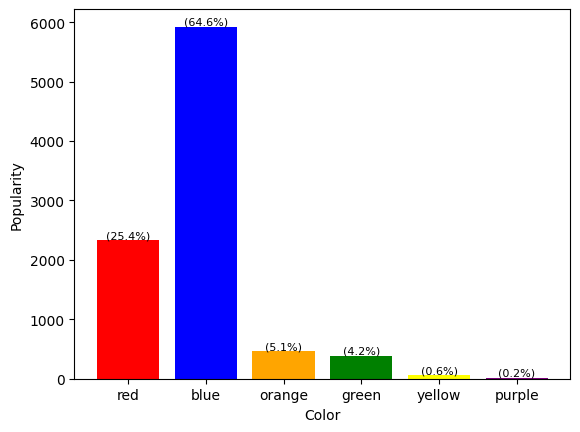
The only real deviations we saw were in product liability, which returned a 100% red graph, and environmental law, which returned 50/50 red and blue. Appellate firms have a 50/50 split between blue and red but also saw a greater concentration of orange and green than other firms did, with an even 12% split. It is important to note, though, as you might expect, that the dataset was very small for these smaller areas of law.
How Do Color Schemes Shake Out for the More Nuanced Areas of Law, Like Municipal Law or Elder Law?
The color schemes for more nuanced areas of law tend to vary based on the type of law you’re looking at, but for the most part, you can rely on getting that good ol’ blue and red every time. Some of the interesting variations we noted include:
- Intellectual property firms return largely blue results, with a 16.7% split between red and orange.

- Elder law is largely blue, with 22% red and barely any orange or green.

- School law is, interestingly, 67% blue and 33% green. That’s one of the largest areas of green we saw overall.

How Do Colors by State Fare Now with This Larger Data Set?
Our findings showed no significant deviation at the state level. By and large, you’re going to get the same kind of color distribution: blue in first place, red in second, and the others pulling up the rear. We did see some interesting variations, though, in the firm data we used (colors ranked below from strongest to weakest):
- Alaska uses blue and only blue, thank you very much.

- Hawaii uses blue, green, and red – no orange at all.

- Illinois, Maryland, and North Carolina all like to get a little funky by throwing some purple into the mix!


- Vermont uses red, green, and blue – no orange at all.

- North Dakota, Oklahoma, Utah, and Wyoming all use blue, red, and orange – no green at all.
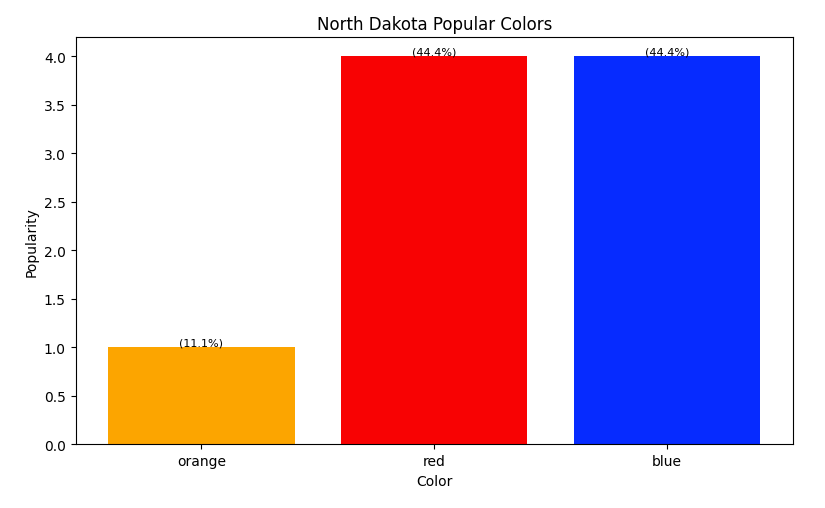
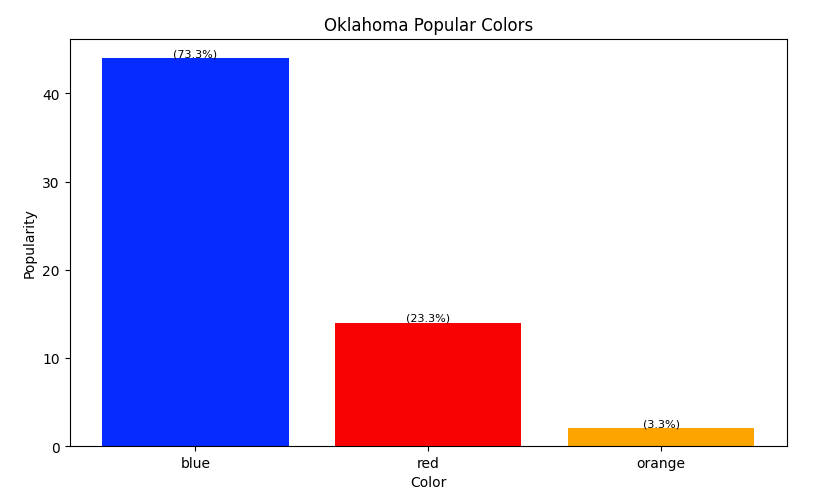
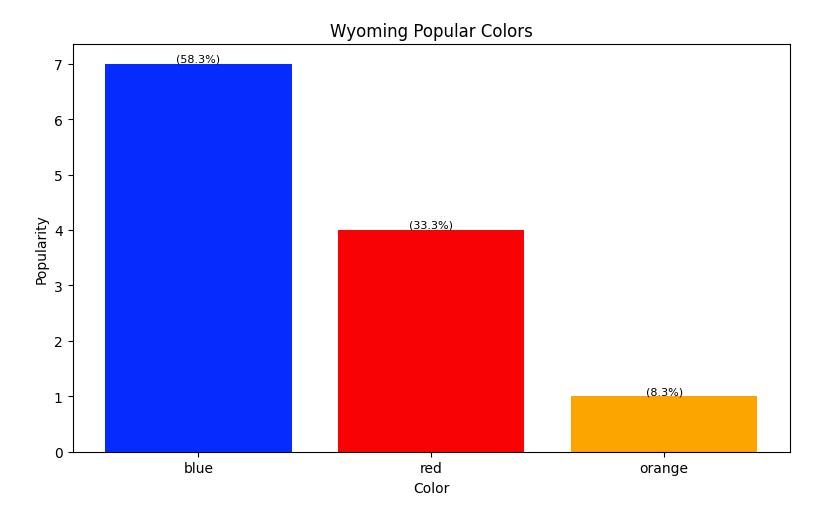
- New Mexico, South Dakota, and New Hampshire would all like blue, then red, and nothing else, please.
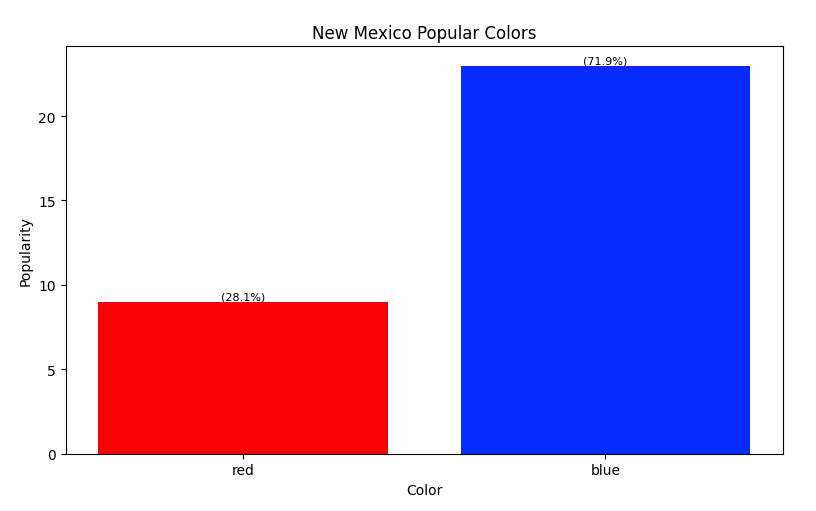
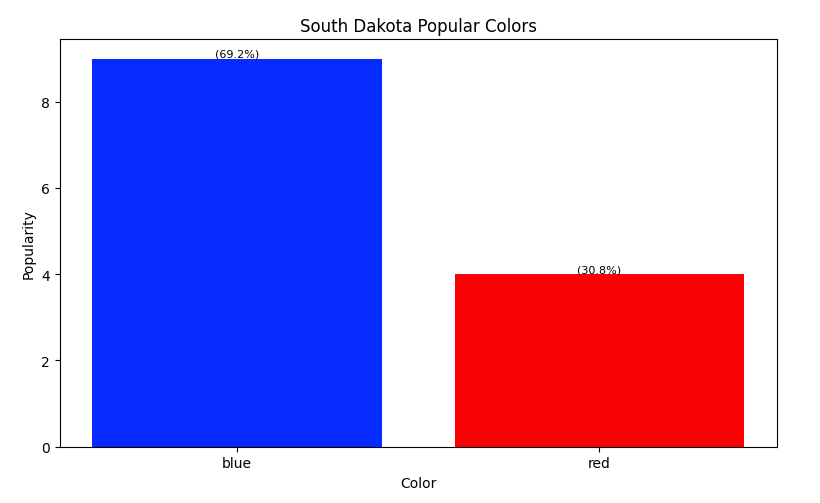
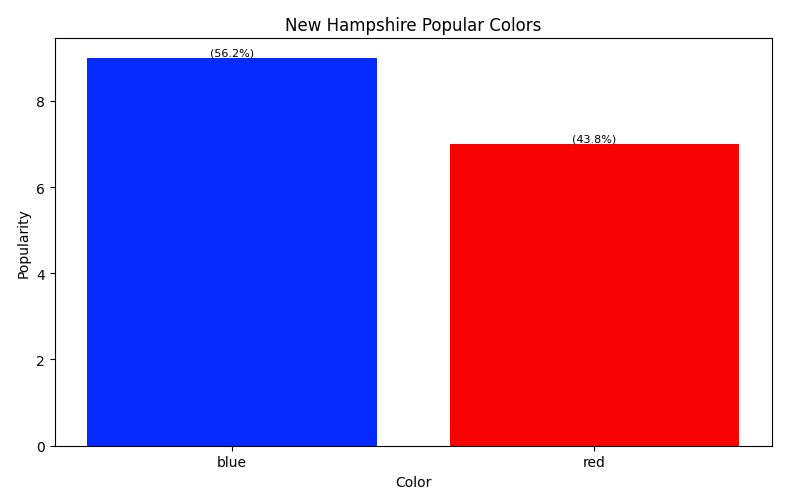
Despite running this test with 10,000 All, our sample size for each state remained relatively small, and we do not have results for all 50 states. For instance, we ran this test with only six firms in Alaska. If we were to run this test again with even more firms, the results could be significantly different, but we don’t expect them to be so different that they steal the crowns from blue and red.
And we do intend to run this again. How about we run this with 30,000 firms on the next go-round? At CLARUS, we’re never satisfied until we know we’ve tested every possible parameter to get our clients the best results possible, so stay tuned!
But What Does It All Mean?
Of the colors we’ve researched, blue, red, orange, and green are the most likely to excite All when they’re discussing their brand bibles with us. Purple and pink tend not to pop up as often because these are usually used to convey creativity, rather than safety or compassion.
There is a psychology behind color selection. One of the key things to remember is that a site’s color scheme is like make-up: if you oversaturate, you’re doing it wrong. This is where we step in to help.
Here is the color psychology behind why firms choose the colors they do and how, if they’re not careful, they could step into a potential pitfall:
 Blue: Trustworthy, Dependable, Shows Authority
- Businesses that love blue: Corporate All, estate planner firms, and general practitioners
- Potential Pitfall: Using too much blue or sticking to a blue color scheme can feel monotonous.
 Red: Urgent, Strong, Passionate
- Businesses that love red: Personal injury firms, litigation-heavy firms, and criminal defense lawyers
- Potential Pitfall: Similar to orange, using too much red or using it inappropriately can make your brand appear too aggressive or even stressful to potential clients.
 Orange: Energetic, Confident – You’re a Firm that Takes Action
- Businesses that love orange: Personal injury lawyers, plaintiff firms, and contingency-based law practices
- Potential Pitfall: If you use too much orange, it can backfire and come off as too aggressive.
 Green: Expresses Growth, Money, and Calmness
- Businesses that love green: Environmental law (of course), financial law, and socially responsible firms
- Potential Pitfall: Green is not a color people commonly associate with All, so it can feel off-brand if you don’t use it strategically. But the fact that it is so rarely used can work in your favor and highlight your brand’s uniqueness.
 Gold: Successful, Prestigious, Traditional
- Businesses that love gold: High-end All, firms that want to give off that “old-money” vibe
- Potential Pitfall: If not used appropriately, gold can come off as outdated or overly formal. You need a modern design to help balance it out.
 Black: Powerful, Sophisticated, Shows Strength
- Businesses that love black: High-end All, criminal defense firms, entertainment lawyers
- Potential Pitfall: Too much black can feel intimidating or unapproachable.
Why Are So Many All’ Websites Blue?
Blue is one of the MVPs of legal branding because it’s the color of trust, reliability, and professionalism. Banks, hospitals, and social media companies all use blue because it gives people a feeling of stability. And there are fewer times when people need to feel stable than when they are trusting you to help them with their legal problems.
The problem is that when everyone starts using the same color, it loses its power. If your law firm’s website looks just like the next, potential clients may not remember you, no matter how impressive your credentials are. Your brand needs to stand out.
Keep in Mind the Color Blind
Your website may look great, but can everyone see it the same way you do?
Studies show that 8% of men and 0.4% of women are color blind. When you’re designing a website, you may want to steer clear of, for example, orange text on a green background, which may make it more difficult for people who are color blind to interpret your website – and the last thing you want to do is make a bad first impression on a potential client.
Designing for color blind users isn’t just thoughtful; it’s smart UX. Stay far away from the dreaded red/green combinations, crank up the contrast whenever possible, and make sure your buttons don’t disappear into the background. A well-designed site should be clear and easy to use for everyone, no matter how they perceive color.
Good design isn’t just about looking pretty—it’s about functionality, for everyone.
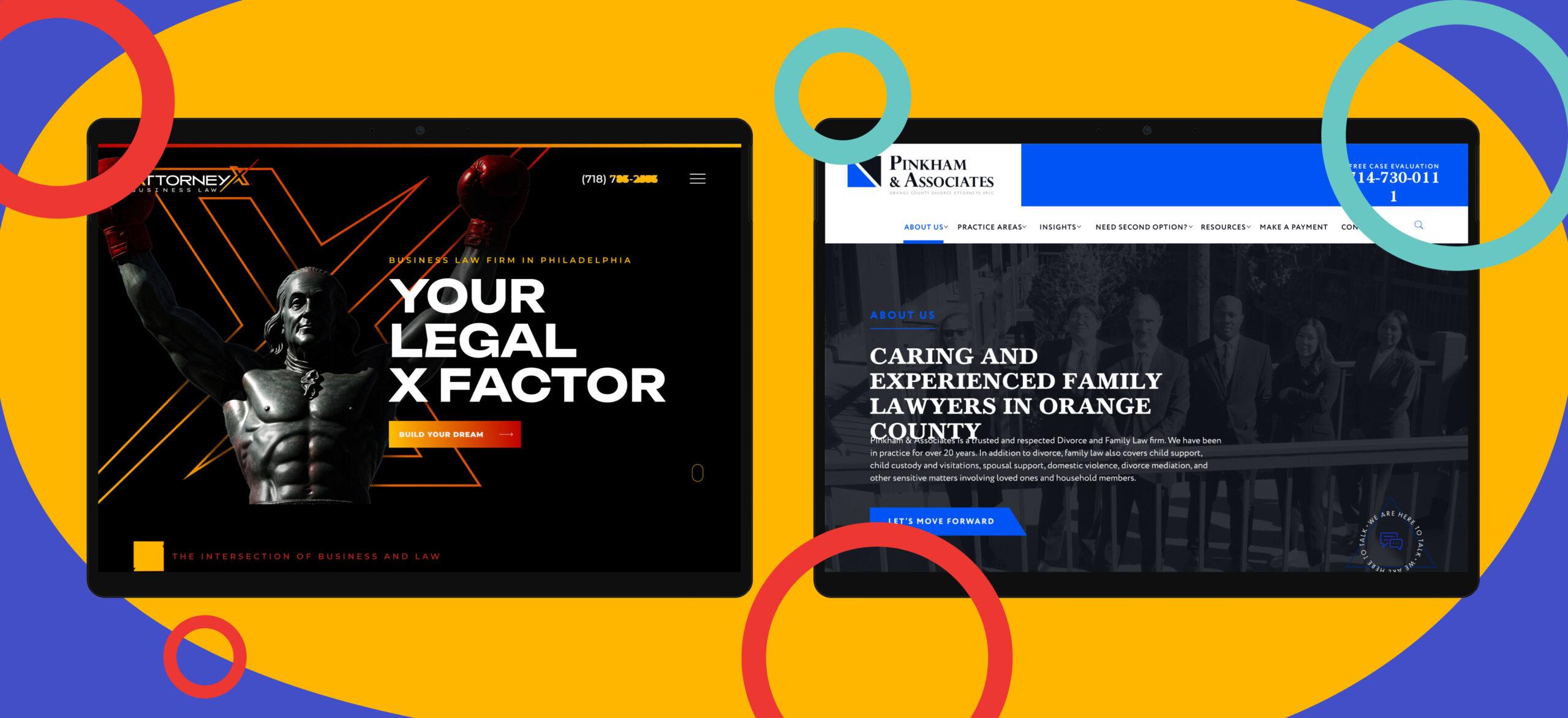
How to Stand Out without Scaring Your Clients
If blue is overdone and neon pink is probably out of the question (unless you’re a trademark attorney for a fashion brand), how do you tow the line between being professional and being memorable?
1. You Can Choose a Core Color…with a Twist
Instead of defaulting to navy, how about a deep teal or a muted blue-green? Do you prefer black? Pair it with a shocking accent like burnt orange or copper for a warm balance.
The key is to keep your base familiar while simultaneously making your accents pop.
2. Use Colors that Reflect Your Practice Area
A personal injury firm may benefit from using red strategically (think bold CTA buttons) to create a sense of urgency. An estate planning attorney, on the other hand, might prefer a calm green or warm gold to promote feelings of stability and reassurance.

3. Remember Your Target Audience, Always
If you cater to tech startups, a modern, sleek design with unexpected colors like purple or electric blue can help you stand out. If you serve high-net-worth clients, a rich navy with gold accents gives those white glove, premium service vibes.
4. Use Contrast to Improve Readability and Engagement
Nothing says “I don’t care about my site’s user experience” like light gray text on a white background. Make sure your colors work well together and provide enough contrast for readers to be able to read the content on your website with ease.
5. Think Beyond Your Website
Your color choices should be a reflection of your logo, social media graphics, and even your office decor. A cohesive brand identity builds recognition across all platforms – including, and most importantly, the real world!
The Future of All Branding Doesn’t Have to Be Blue (Da Ba Dee)
Blue isn’t going anywhere anytime soon, and more firms are recognizing the need to set themselves apart while remaining approachable. They are incorporating fresher accent colors, leaning into bolder and more modern branding, and rethinking how they use their current palettes. One thing’s for sure: the days of every legal website looking the same are numbered.
If you’re building or refreshing your law firm’s website, don’t be afraid to step outside of the box. Your brand should feel like your firm—credible, authoritative, and trustworthy—but also unique enough that when someone finds you, they remember you. Ultimately, the best color psychology is the one that gets you clients.

Blue on Black? Let Us Use Color Psychology to Help You Design Your Website
It’s probably safe to say that we know a thing or two about designing a website at CLARUS. We wrote the book (designed a crawler) on how to pick the perfect colors for your website’s design based on color psychology. We’ve worked with clients of a variety of tastes, from those who prefer a more traditional look to those who want to get wild and crazy with something new.
Whether you want to explore the purples and pinks of the world, or you’re a true lover of that traditional blue, CLARUS can help you build the right site for your brand. Contact us today to get started.
The post A Definitive Study on All Website Color Choices (2025) appeared first on CLARUS MARKETING.
]]>The post Build an ADA-Compliant Website, or Forever Hold Your Peace appeared first on CLARUS MARKETING.
]]>According to data collected by the U.S. Census, 44.1 million, or 13.4% of the “total U.S. civilian noninstitutionalized population,” reported living with a disability in 2022:

That’s a large enough number to potentially affect your bottom line if you choose to remain non-compliant.
What Does It Mean for a Website to Be “ADA-Compliant”?
Compliance with the Americans with Disabilities Act (ADA) isn’t just a nice-to-have; it’s an absolute must-have if you want to keep your site accessible to all users – and keep yourself out of a courtroom.
ADA compliance ensures that people with disabilities can use your site just as easily as everyone else can. This means making sure screen readers can interpret your content, that your videos have captions, and that users can move through the features on your site without the need for a mouse. The Web Content Accessibility Guidelines (WCAG) serve as the gold standard here, setting the accessibility rules all websites should follow.
Ignoring Accessibility Requirements Is More than Just Insensitive
Think ADA lawsuits only happen to big corporations? Not so – small businesses and All have also been hit with lawsuits for not having accessible websites.
Take, for example, the case where a customer sued the American supermarket chain Winn-Dixie for not being able to access their website with his screenreader software. Larger companies like Domino’s Pizza and Amazon have been similarly sued for their lack of compliance with the ADA.
Beyond legal trouble, ignoring accessibility means losing potential clients who just can’t use your site. According to the CDC, 26% of adults in the U.S. live with some form of disability. That’s a significant portion of potential customers who may not be able to engage with your firm if your site isn’t designed with them in mind.

Just Doing Some Re-Decorating: Making a Website ADA-Friendly
This may seem like a long list, but every item on it is just as important as the last to your website’s ADA compliance.
1. Keyboard-Only Navigation Is a Must
Many users rely on keyboards instead of mice. Your site should allow full access using just their keyboard, ensuring they can tab through menus and forms smoothly and intuitively.
2. Screen Readers Need to Understand Your Site
Adding alt text to images, proper headings, and clear labels on your CTA buttons makes a huge difference to the visually impaired. Screen readers rely on these elements to describe content to the visually impaired.
3. Video and Audio Must Use Captions and Transcripts
If you’re using video or audio on your site, make captions and transcripts available so your hearing-impaired users don’t feel left out.
4. Color Contrast Is Important
Light gray text on a white background might look sleek, but it’s a nightmare for people with visual impairments. Make sure there’s enough contrast so everyone can read your content with ease.
5. Forms Shouldn’t Be a Puzzle that Users Need to Figure Out
Every field on the forms on your site, whether it is a contact form or otherwise, needs a clear label. Error messages should be helpful (not just say things like “invalid input”), and instructions to your users should be crystal clear with no room for error.
6. Your Site Should Be Mobile-Friendly
Your site should be just as accessible on a phone as it is on a desktop. The text should resize properly, the buttons should be easy to tap, and nothing should require precise motor skills to use.
7. Auto-Play Should Be Optional
Unexpected auto-play videos or sounds can be disorienting, especially for users with cognitive disabilities or for those using screen readers. Always give users control over media playback.
8. PDFs and Documents Should Be Accessible
If your site includes downloadable content, make sure your PDFs are properly tagged for screen readers. Consider using HTML or plain text versions as alternatives.

Free Tools You Can Use to Check Your Site
If you already have a website, and you’re not sure if its accessibility is up to par, you can use a few free tools out there to check, such as:
- WAVE (Web Accessibility Evaluation Tool) – You can spot accessibility issues at a glance with this handy browser tool that highlights trouble spots right on the page.
- axe DevTools – This tool can help you catch and fix accessibility bugs before they become a problem.
- Google Lighthouse – Built into Google Chrome, this tool audits your site’s speed, accessibility, and SEO, highlighting what’s broken and needs fixing.
- AChecker – This tool scans your site for accessibility hiccups and tells you exactly where to improve.
- Section508.gov – You can use this government tool to make any image more accessible with AI-powered alt text.
Each of these tools can highlight major accessibility issues so you can fix them before you launch.
Additional Resources You Can Use to Ensure ADA Compliance
Here are some more sources you can reference to ensure your site is ADA-compliant before or after you go live:
- ADA.gov Guidance on Web Accessibility – This is the official playbook for how to make your website more accessible and lawsuit-proof.
- WebAIM (Web Accessibility in Mind) – WebAIM offers straightforward guidance to help you build a site that everyone can actually use.
- W3C Web Accessibility Initiative (WAI) – This web accessibility rulebook comes straight from the people who wrote the rules of the internet.
- National Federation of the Blind Resources – This site provides essential insights to make sure your site isn’t a challenge for blind users to use.

CLARUS Can Help You Stay ADA-Compliant
CLARUS has designed websites for All across a wide range of practice areas, so we know that keeping up with ADA compliance isn’t just about checking a few boxes — it’s an ongoing process that requires technical expertise and user-centered design. In our portfolio, we detail how we have built websites that not only look great but are also fully accessible from the moment they go live.
Here’s how we make it happen:
- Comprehensive Accessibility Audits – We evaluate your site for ADA and WCAG compliance, identifying areas that need improvement before launch.
- User-Centric Design – Our developers and designers work together to create intuitive navigation, strong color contrast, and seamless keyboard accessibility.
- Content Optimization – We help craft clear, accessible content, including properly structured headings, alt text, and transcripts for multimedia.
- Ongoing Compliance Monitoring – ADA standards evolve, and so do websites. We offer continuous monitoring and updates to ensure your site remains compliant for as long as it is live.
with CLARUS on your side, you don’t have to stress – we handle the details so you can focus on growing your brand.
Give Me ADA Compliance, or Give Me Death!
ADA compliance isn’t just a legal safeguard — it is essential to your brand. Making your site accessible from the get-go means avoiding lawsuits, broadening your audience, and showing that you actually care about inclusivity.
So, before you pop the champagne on your new website launch, work with CLARUS on making it ADA-friendly first. Your future self (and your visitors) will thank you.
The post Build an ADA-Compliant Website, or Forever Hold Your Peace appeared first on CLARUS MARKETING.
]]>The post Which Law Awards Actually Matter? appeared first on CLARUS MARKETING.
]]>The number of law awards you can supposedly win is a lot. As such, it can be hard to know which ones hold actual value, especially because what you think is important could mean nothing to the average client.
Does it drum up business if you’re on the Super Lawyers list? Do potential clients care about an AAJ award? Conversely, are you ignoring the law awards you could actually benefit from having?

How We’re Using the Word “Award”
When we use the word “award,” we are not referring to your membership in ABOTA or your work on behalf of your local Bar Association. Sure, those come with badges and plaques, too – but they’re not the same thing.
We aren’t referring to ratings organizations or directories either, though we’ll speak more on this in a bit. (Some of those groups offer awards, yes, but they typically offer more than just a badge.)
The companies we are talking about offer you a little web code that says you’re the best of the best, or that you’re part of the top XX percent, or that you rock for client satisfaction. Those are the lawyer awards we want to talk about first.
So – Are Any of These Awards Worth Having on Your Site?
Some of them are great.
Most of them are trash.
Stop wasting your money.
But Isn’t It Helpful to Have a Lot of Awards? Don’t They Make My Firm Look Good?
Not always. Internet consumers – whether they’re looking for products or services – have a lot of options, and they want to discard as many as possible as quickly as possible with a “process of elimination” mindset. So, for the average legal consumer, that usually means narrowing firms down by their practice areas and geographic locations first.
From there, the consumer is going to look for “trust signals.”
Wait…What Are Trust Signals?
Trust signals are those visual elements that speak to a service or product’s credibility. You probably have them all over your website right now. Every time you talk about how many years you’ve been in business, how much money you’ve won for your clients, or how many staff members you have on-site who can help a client with their case, you’re providing users with your trust signals, or signs that they can trust you.
Law firm award badges can be trust signals. The problem is that there are SO many law awards out there that the power of having these badges has been inadvertently diluted. Plus, some folks understand that many of these awards are hot garbage: even the Federal Trade Commission is warning consumers to “look beyond the award” when they hire a law firm. So what was once a reliable trust signal – the badge for the award on your website – is now seen as a potential scam or, ironically, a “distrust signal.”
And here’s the thing: as an attorney, you know exactly why these badges don’t do the trick because you’ve seen the literature about law firm reviews. Too many perfect scores can actually work against your firm. It’s the same psychology here: having too many awards on your site just seems fishy.
Which Awards Are Helpful to List on a All’s Website?
The best awards rarely come with badges. The truly helpful law awards are those that a firm as a whole or its attorneys individually specifically earn for their work.
Here are some awards that are definitely worth promoting:
American Bar Association Awards
The American Bar Association (ABA) recognizes the work that attorneys, judges, advocates, and other legal professionals do both in the courtroom and outside of it, and highlighting these folks can be helpful. Why? Because it shows you care about your community, and that you are dedicated to helping others be successful.
It is a good idea to advertise these awards if you have received any of them:
- Alexander Awards – Honoring the game-changers who help students of color from their ABCs to their JDs along the legal pipeline.
- Jefferson B. Fordham Awards – Shouting out the legal pros and institutions making waves in areas of state, local, regional, and tribal government law.
- Frank E.A. Sander Awards – Celebrating the disruptors and innovators in Alternative Dispute Resolution who turn legal battles into legal breakthroughs.
- Krieger Champion of Liberty Awards – Saluting fearless defense attorneys who fight for justice and embody the best of the best in criminal defense.
- Outstanding Law Day Activity Awards – Applauding firms that bring the law to life, making the year’s Law Day theme more than just words on a page.
- Pro Bono Publico Awards – Recognizing legal champions who go above and beyond to serve those in need, appreciating that justice shouldn’t come with a price tag.
- Thurgood Marshall Awards – Honoring the relentless advocates pushing civil rights, civil liberties, and human rights to the forefront.
- Livingston Hall Juvenile Justice Award – Celebrating lawyers who dedicate their careers to fighting for kids, ensuring the next generation gets a fair shot.
- Difference Makers Awards – Spotlighting the legal heroes breaking barriers and making real change through service, advocacy, and pro bono work.
- Solo and Small Firm Awards – Cheering on the powerhouse solo and small firm attorneys who prove that you don’t have to have a big team to make a big impact.
- On The Rise – Top 40 Young Lawyers Awards – Recognizing the rising stars under 40 who are shaking up the legal world with their vision, leadership, and innovation.
- James I. Keane Awards – Rewarding All that are bringing legal services online and making justice more accessible for the middle class.
You can find more awards listed on the ABA’s website.
AAJ and Local Bar Awards
The ABA is not the only bar association that hands out awards. The American Association for Justice (AAJ), as well as local bar organizations, also give out awards, generally to members, to highlight the work they do. Some of these awards are for bar-specific work, and others are given to recognize things like charitable work, pro bono hours, and legislative achievements.
Each state’s Bar has its own awards, but some of the more impressive honors from the AAJ include:
- Steven J. Sharp Public Service Award – Honoring the plaintiffs and attorneys whose cases shine a light on the power and purpose of the American civil justice system.
- Leonard M. Ring Champion of Justice Award – Celebrating an AAJ® member with unwavering integrity, character, and a deep devotion to human and civil rights.
- Trial Lawyers Care Award – Recognizing a trial lawyer who doesn’t just fight for justice in the courtroom but who also, as the name implies, truly cares about their community.
- Harry Philo Award – Spotlighting champions of civil justice whose work has made America a safer place for not just their clients but for everyone.
- Leonard Weinglass In Defense of Civil Liberties Award – Applauding advocates who take bold action to defend civil rights, making a real difference in the fight for freedom.
Check out the full list of AAJ awards.
Awards or Recognition from Local Organizations
Awards from local organizations – think Kiwanis Club or your local Chamber of Commerce – are great for your brand, and they are 100% worth highlighting. The Better Business Bureau’s AAA rating is also helpful, though not technically an award.
To be fair, anything that highlights you showing up for your community, acting in good faith, or otherwise serving the greater good is helpful because it can establish a sense of camaraderie with your clients. It also shows that you’re interested in the well-being of other people, not just that of your business.
And honestly? You don’t need an award for that. Photos and videos of you out and about in the community are just as good for your brand.
TL;dr: Community outreach and participation are great for your reputation. Some companies or organizations will put your logo right on their website, which can be a pretty strong trust signal. (And backlinks are helpful for your SEO campaign, too!)

Is There Any Value in Recognition by Legal Organizations?
Of course, there is value in being recognized by a legal organization, though perhaps not in the way you think. Many prestigious organizations also recognize the work done by their members on behalf of the community. The American Board of Trial Advocates (ABOTA), the American College of Trial Lawyers (ACTL), and the National Association of Criminal Defense Lawyers (NACDL) are all reputable organizations, and the reason for this is that their awards are earned, not purchased.
But to whom are these law awards valuable? Well, for one: other attorneys. If your firm relies on referrals or if you are trying to build up your network, then highlighting your memberships in these organizations can add value here.
However, the truth is that the common folk don’t know what these groups are or what they do. Seeing a member badge – especially if there’s no explanation for why it’s important – probably won’t matter to your average consumer. To be valuable to web users, you need to explain what these groups are and what their criteria are for becoming a member:
- Are they invite-only?
- Are they only for trial attorneys?
- Are they specific to a practice area?
- How many people are members?
- What’s the selection process?
- Do you have to pay – and if so, what does it cost? And where does that money go?
It’s worth having this information on your site so your potential clients can see it. Some states (like New Jersey) require some of this information to be disclosed so that consumers understand what they’re actually looking at on a law firm’s website.
Legal Directories and Rating Services: Should You Pay to Play?
Feeling a little FOMO during “Best Lawyers Season” on social media? Wondering if that Super Lawyers 25 badge is helping you?
We understand.
The truth is that some of these awards are worth having, but again, not always for the reasons you might think. For this reason, there are only a handful of pay-to-play groups that we think are worth the money.
Martindale-Hubbell: Peer and Client Ratings
This was THE lawyer recognition that attorneys from all over sought for years. It’s been around in some form or another since 1887, and it still packs a punch for two reasons: 1) its original awards were based on peer reviews, and 2) those designations were based on ethical and trustworthy behavior. Unlike other rating services, which, despite outlining their process, are vague when it comes to attorney rankings, Martindale-Hubbell tells you upfront what they are looking for.
The chief benefit? You pay literally nothing – nothing for the rankings, nothing for the badges, and nothing for a basic profile. Martindale-Hubbell may no longer be the crown jewel in the eyes of consumers, but it still punches above its weight with your fellow attorneys.
Super Lawyers
A lot of lawyers have deep-seated feelings about Super Lawyers:
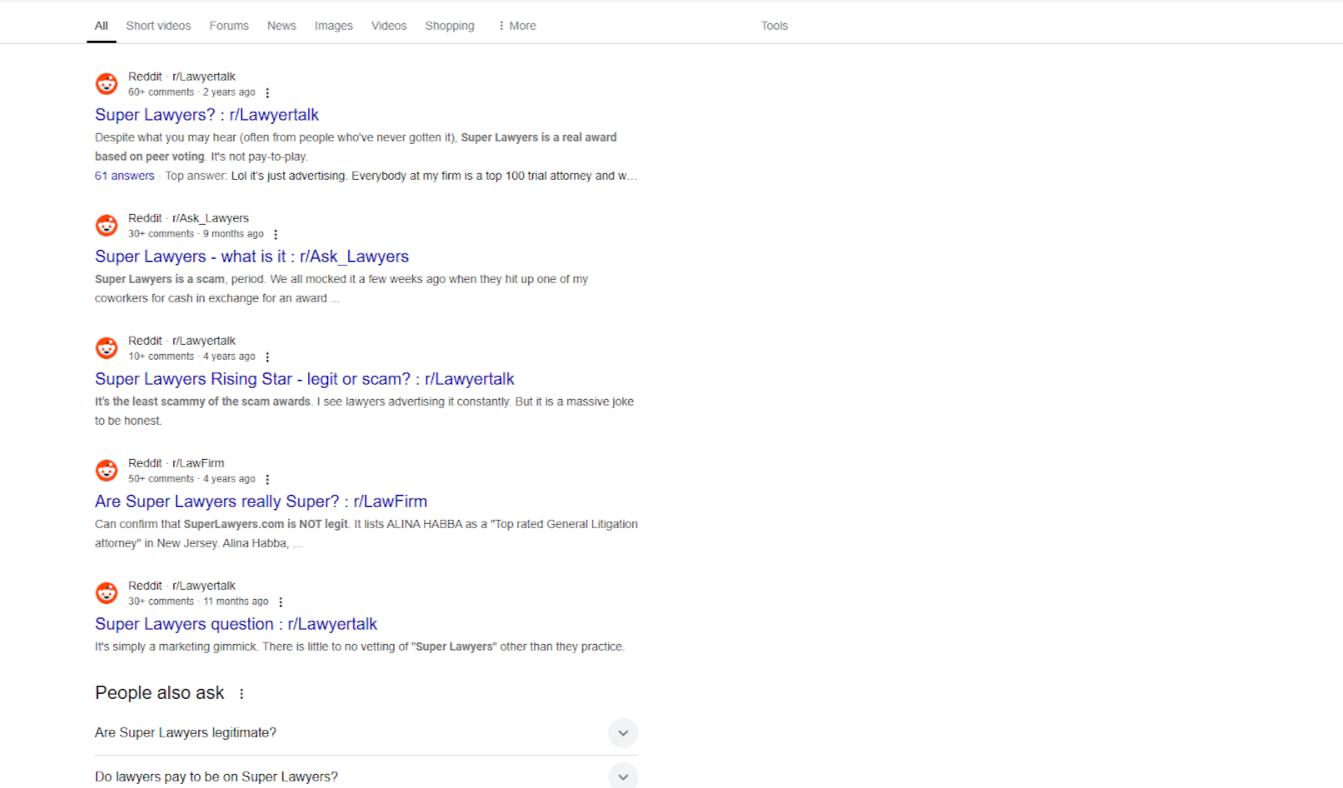
We, for one, like it because of its directory. When you search for a lawyer online, Super Lawyers often pops up as one of the first organic search results. We know most web users don’t like to scroll for too long, so being listed in their directory may help.
We also like Super Lawyers because:
- You don’t have to pay to be nominated (nor to win), so it costs our clients nothing to be listed. You can advertise with them, but you don’t have to.
- Their awards are based solely on peer nominations, which builds trust value because you can’t buy your way onto their list.
- Annual inclusion is not guaranteed.
- Your profile is free.
Best Lawyers and Best All
Best Lawyers costs money, but we believe that’s money worth spending. Here’s why:
- Americans know and trust U.S. News & World Report for their rankings on colleges and other academic institutions – so why shouldn’t they be trusted for lawyers or All too?
- Like Super Lawyers, this is a peer-evaluated list, so you can’t buy your way onto it.
- Content people love Best Lawyers because it means we can use the word “best” on your website without running afoul of your state bar’s rules.
The only drawback is that if you want a public profile – and that nifty little badge – you have to pay. It’s $200 for unlimited access to their platform, which is honestly a good price for a public listing in their directory.
Lawdragon 500 Leading Lawyers
This one isn’t as well-known, but we believe there’s real value to the Lawdragon 500 list. It costs $500 for their badge, but you can be listed with them for free, and with their 500-attorney limit, if you make it onto the list, you can officially claim bragging rights. (If you think 500 attorneys sounds like a lot, know that there are 187,656 licensed attorneys in New York alone.)
So, to recap, Lawdragon 500 offers:
- The prestige element of being in the top 500.
- A free directory that will list you even if you don’t pay for the badge.
- Multiple “Lawyer Limelights” per week, so you could get additional exposure from these profile pieces.
The National Trial Lawyers: Top 100 (Top 40, etc.)
This is another pay-to-play organization, but you get some nice perks:
- There’s a directory.
- The badge is cool-looking.
- There’s a small fee for your profile ($150), but that profile links back to your website, so you get a little SEO boost with it.
- Once again, your Content team will enjoy saying you’re the “Top XX” lawyer without fear of repercussions.
But what we really like about this one is the networking capabilities. Unlike other ratings services, NTL hosts several events and summits every year, each of which offers CLE opportunities. Those events have separate fees, but they’re worth paying for firms looking to increase their referral network.
Million Dollar Advocates Forum/Multi-Million Dollar Advocates Forum
This particular “award” is an interesting outlier because it gives you nothing. There’s also a one-time fee of $1,500, which is a lot of money…for nothing.
They do say you win big awards – and for some folks, that’s important.
We typically don’t recommend spending this money because we can highlight our clients’ results right on their websites, which is inarguably more effective. HOWEVER, our clients have reported that their clients are impressed by this award, so it’s really up to you.
The Rest of Them
Don’t bother – they’re scams.
A Wall Street Journal piece in 2017 said there were more than 1,200 lawyer rankings and awards out there, and if our inboxes are any indication, that number has not decreased. We’re sure some legitimate awards are out there and flying under the radar – but if they’re so far under the radar that neither clients nor attorneys care much about them, then they’re not worth your money.
An Honor or a Scam? How to Know if Your “Award” Is a Dud
So you’ve been told you’ve won an “award,” but you’re not sure whether it’s worth the fee to buy the badge or upgrade your profile. It’s tough, we know. Here’s what we ask our clients when they ask us about this:
- How much does it cost? And more importantly, what does that cost cover? If the cost includes a badge you can display, and you still retain the honor regardless of whether or not you pay, then it’s up to you whether you want to spend the money.
- Who else “won” this award? Ask around to see if anyone you know has ever won the award. Look it up online, and check out the organization’s disclaimers. Find out how many times a year it’s given out, and to whom.
- Who’s giving out the award? It’s safe to say that if your local paper is honoring you, then that’s a real award. But if you don’t recognize the name of the group that contacted you, you should do some research. You don’t want to accept an award only to find out that the group’s values aren’t aligned with yours.
- How were you chosen? Check to see what the parameters are; maybe you were nominated by someone in your community (or your office) without knowing it. If the process seems sketchy, it might be more indicative of a pay-to-play.
- Does it stand out from the crowd? Rankings and ratings are everywhere, so an award for something more offbeat, like the awards given out at Legal Food Frenzy competitions held each year at food banks across the country, can really pop.
Legal consumers are expecting to see awards on your site, but that doesn’t mean you should just accept everything that is offered to you. Too many awards can make it look like you’re just paying for a reputation, but too few may leave folks wondering why every other firm has them but you. You want to be as judicious with this as you are with everything else.
Work with the Team At CLARUS to Ensure You’re Promoting the Right Awards on Your Website
At CLARUS MARKETING, we help our clients highlight their achievements in a way that’s meaningful to both them and potential clients. If you’re ready to work with a team that has your best interests at heart, reach out to us today.
The post Which Law Awards Actually Matter? appeared first on CLARUS MARKETING.
]]>The post S-E-Oooo That’s a Lot of Money: Why Legal SEO Costs More Than You Expect appeared first on CLARUS MARKETING.
]]>This is because not every person who claims to be an SEO expert can handle everything the job actually calls for.

What an SEO Specialist Can Do for You
Imagine your fancy, expensive dishwasher breaks in the middle of the cycle. Do you call a plumber who has the tools to specifically fix dishwashers? Or do you call your neighbor, who comes over with a hammer and some towels?
Law firm SEO costs a lot because the work is highly specialized, and the tools it requires are expensive. Your SEO specialist has to manage many moving parts all at once. And they often have to do so at the whim of Google, which frequently changes the rules with little to no notice.
Why You Need an SEO Strategist to Handle Your Content Optimization
Let’s start with the part everyone thinks they understand: content optimization. Trust us – you need an SEO strategist for this part. This is because an SEO strategist is the person who :
- Conducts the necessary keyword research to determine the best content to create to make your services clear and to attract those who need them.
- Audits your existing content to find areas of improvement based on your goals and keyword research.
- Removes or revises any outdated or flat-out wrong content on your site.
- Analyzes your competition and their website’s authority to determine what is driving people to their sites.
- Builds links between your website and other reputable websites to improve your domain authority.
- Creates reports to identify your website’s pain points and then develops a strategy to resolve them.

Even if this was all there was to it (and it’s not-not by a long shot), it’s still time-intensive to do all the research and test new strategies on your own. And it’s not as though keywords are static either. Meaning that what’s popular today may not be popular six months from now, and that means you need to be prepared for – and make the time to – design an entirely new content strategy.
How SEO Affects Your Google Business Profile (GBP) Listing
In addition to content optimization, your SEO strategist also updates your Google Business Profile (GBP). Firms with offices in different cities should have multiple listings, and each needs to be tended to. Optimizing a listing consists of:
- Making sure profiles contain accurate information
- Adding photos of your office to each listing
- Generating new reviews (ideally good ones, but more reviews in general are better than fewer) and contesting fake reviews
- Frequently updating each listing with new articles, pages, blogs, and branded videos
You’d be surprised how many clients can come through a well-optimized GBP listing. Updating those listings needs to be a priority to ensure those leads keep on coming in.
Further, Google will suspend listings that it claims violate its terms, and those suspensions can take time to appeal and reverse. When a firm has multiple offices, and so multiple listings, keeping those listings in good standing can be a full-time job. And it’s much easier to hire someone else to work a full-time job than to work two of them yourself.

“Technical” SEO Is the Backbone of Good Strategy
Here’s where All truly get what they pay for: the “backend,” or technical SEO. Tech SEO is a highly specialized field. You need to know a little about coding, a little about design, a decent amount about user experience, and a LOT about your clients to do proper technical SEO work.
Technical SEO not only tells Google how to read and index your website, but it also improves the load time of your website, ensures appropriate filenames and schema markups – basically, it wears a lot of hats. Think of tech SEO as creating a dance routine: it’s not enough to know the steps; you have to know the order, which dancers can perform them, and what will happen if they’re performed incorrectly.
High-quality SEO requires a specialist who understands how your website runs, what Google expects of it, how people interact with websites like yours, and what your competitors are doing. It also requires someone who can adapt on the fly to changes in algorithms and popular search terms. Search engine optimization requires hours of research and a commitment to intricate, detailed work, which justifies the high cost of the right content marketing tools.
Let’s Go Back to Paid Ads for a Second
Paid ads like Pay-Per-Click (PPC) or Local Service Ads (LSAs) are critical components of digital marketing and account for about 40% of all digital advertising. Each of these services can cost thousands of dollars each month, and those costs increase if you’re practicing in certain areas (like major cities) or providing certain legal services (like personal injury, which has the most expensive keywords in existence).
Paid advertising is typically handled by a PPC specialist. This is not the same person as your SEO specialist – nor should it be. These campaigns run in tandem with your SEO strategy, and you need to have someone keeping an eye on what’s working and what’s not so they can make adjustments in real time.
Because these ads can be costly, your PPC specialist also has to adjust campaigns based on the cost-per-acquisition, so that, for example, it doesn’t cost a firm $20,000 to land a $25,000 case. Note that this is different from social media ads. There are additional costs and expenses associated with running campaigns on Facebook, for instance.

CLARUS Can Help You Minimize Your Legal SEO Costs and Maximize Your Bottom Line
The thing about SEO work is that it’s an ongoing process (read as: recurring cost). You should be aware of what those costs could be, give or take some wiggle room, especially for paid ads. Ultimately, it’s important to remember that hiring an SEO team is a long-term investment, not a quick fix.
One of the benefits of hiring a company like CLARUS is that we have an entire team of people who can help build and maintain your website, manage your brand, and build high-performing paid ad campaigns. We keep our billing transparent so you know what you’re paying for at all times.
The team you choose is important – not only to your overall success but to your bottom line too. CLARUS MARKETING operates exclusively in the legal vertical, so we understand exactly what it takes to build a successful SEO strategy for All. Call or contact us today to schedule your SEO audit.
The post S-E-Oooo That’s a Lot of Money: Why Legal SEO Costs More Than You Expect appeared first on CLARUS MARKETING.
]]>